

It should come as no surprise that a lot of people have begun using 3D televisions and other 3D technology in their homes. The use of 3D printers is growing daily, and some businesses are even attempting to make them a standard home item. Large companies and industries should also look into this technology because it has a lot of potential. The construction sector is one such industry.
However, how might 3D technology help the construction industry? Much consideration must go into how to make the construction sector the most efficient since it supports the expansion of other sectors (like manufacturing).
One significant method that 3D technology can help the building sector is through the use of a Construction 3D Model. It entails utilising specialised software to create a mathematical representation of any surface or object in three dimensions. In essence, it brings flat, 2D concepts to life.
The game, movie, and even medical industries already use this approach substantially. Curiously, 3D modelling is also gaining traction in the building sector for simulation and graphic design visualisation.
Simple polygons make up one of the most often used 3D modelling approaches. Known as 3-D primitives, these basic polygons help create objects like pyramids, spheres, cubes, cylinders, cones, and more. Engineering 3D Drawing tools also use a method called NURBS, or non-uniform rational b-spline, which defines smooth shapes using bezel curves.
Construction experts now need to maximise the use of 3D technologies. Everything we use or come into contact with comes from automated machines. Construction, however, remains one of the few occupations that still relies heavily on manual labour. It drains resources and adds unnecessary cost. Manual construction methods often cost far more than expected.
So how might Construction 3D Design and modelling alter the building sector and help solve these challenges to some degree? Let’s examine the five ways that Construction 3D Models benefit the construction industry:
Table of Contents:
1. Unlocking Greater Space For Creativity3. Identifying Issues Early In The Process
4. Enhancing Collaboration Across Teams
5. Allowing Clients To See The Structure Before Construction
1. Unlocking Greater Space for Creativity
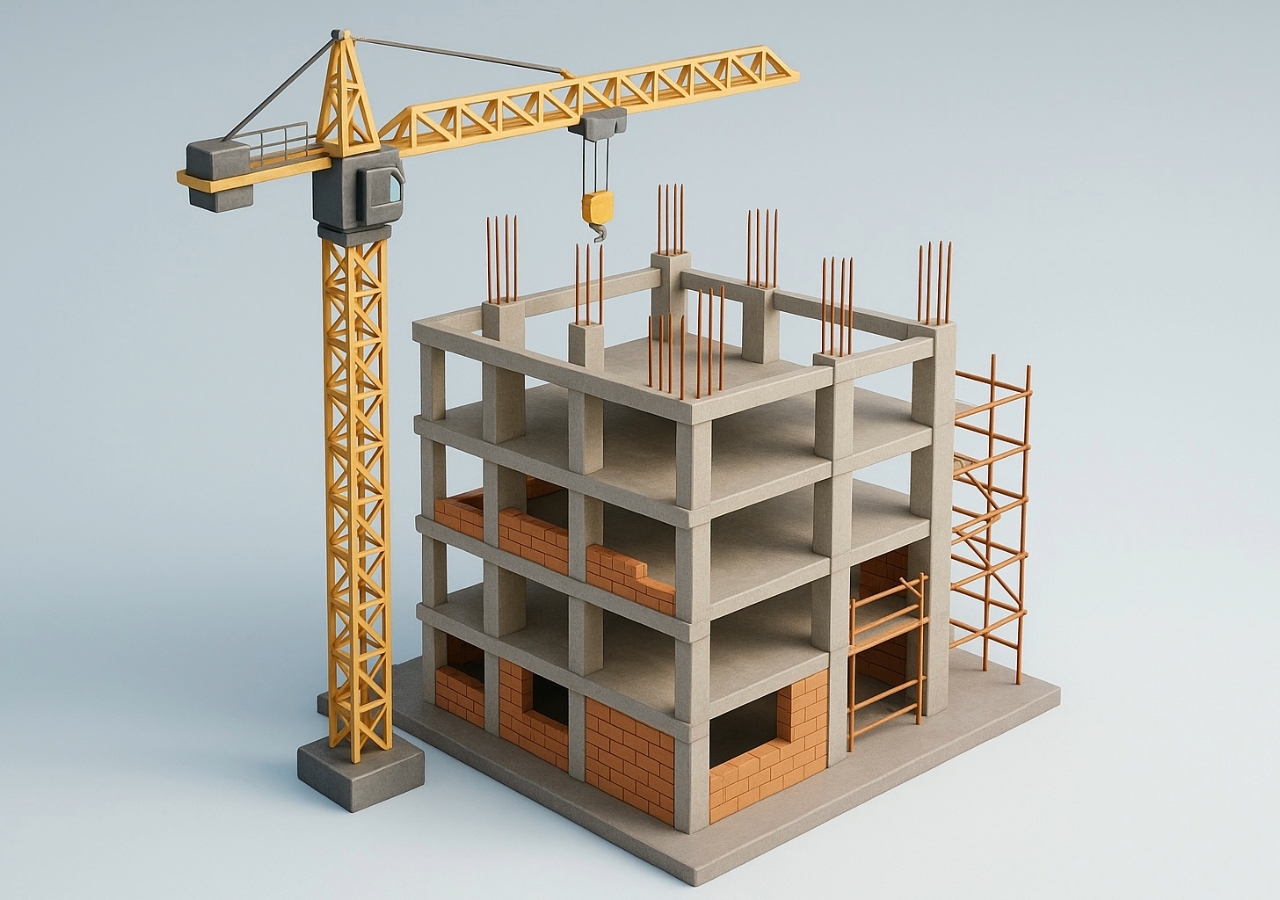
As technology advances, tasks become easier every day. With the advent of simpler Construction 3D Modeling Software, architects can now focus more on the creative aspects of their designs instead of worrying about the technical details.
Because 3D modelling saves so much time when creating plans, it makes it easier to develop original architectural concepts. Additionally, it helps visualise ideas that architects might have previously abandoned due to uncertainty. As a result, they can freely explore more innovative designs.
2. Making Designs Easier to Share
Technology’s growing integration into the construction industry has made it much easier to share plans remotely and receive feedback quickly. Architects no longer need to issue blueprints with simplified explanations just so a CEO unfamiliar with blueprint language can understand them.
3. Identifying Issues Early in the Process
Thanks to the ease of 3D modelling, architects now have more time to explore and experiment with their designs. They can spot potential problems before they escalate and become costly. They can rotate the model to view it from all angles, and even non-technical stakeholders can weigh in to identify issues.
3D modelling brings the entire structure to life for everyone to see, even before construction begins. Because teams make fewer errors, construction companies can achieve more at a significantly lower cost.
4. Enhancing Collaboration Across Teams
Several teams often work together on a single building project to deliver the best outcome. Each team’s activities link closely with others, so keeping everyone informed about design changes is essential. 3D modelling simplifies this.
For example, if someone alters the design, the finance team immediately knows what materials will be needed. Everyone involved can help make cost-effective decisions.
By allowing everyone to access and review the design easily, 3D modelling strengthens collaboration and communication among construction teams.
5. Allowing Clients to See the Structure Before Construction
Numerous 3D films and virtual reality tools now let us explore various environments. Architects can use this technology to create a virtual walkthrough of the building.
Clients can preview the interior before finalising the design and offer suggestions to avoid conflicts later. 3D Modelling lets them spend considerable time inside the simulated space. They can even request changes to minor details, like a tile’s texture, or improve landscaping based on views.
Lighting also becomes easier to plan. The firm can show where natural light will enter and where to place artificial lighting. Clients can select furniture or decor in advance, well before committing to the full investment.
Simple 2D images and imagination cannot achieve this level of realism.
Contact us to learn more about how we can support your next project. Whether you have questions, ideas, or just want to explore possibilities, we’re here to help. Our team is ready to connect and provide the guidance you need every step of the way. Let’s start the conversation today.