
Table of Contents:
- Three Dimensional Printing Explained
- 3D Printing And Additive Manufacturing
- 3D Printing With Fast Prototype Creation
- History Of 3D Printing Invention
- Basics Of 3D Printing
- 3D Printing Becomes Part Of Everyday Business
- How 3D Printing Became Accessible To More People?
- The Growth Of 3D Printing
- How 3D Printing Works?
- Additive Versus Traditional Manufacturing
- Common 3D Printing Methods
- 3D Printing Materials
- Finishing Touches After 3D Printing
- 3D Printing Uses
- 3D Printing Lets People Make Solid Objects Layer By Layer Using Digital Designs
- The Future Of 3D Printing
- Getting Something 3D Printed
- Conclusion
Three Dimensional Printing Explained
One piece at a time, layers build up into real objects when machines follow digital blueprints – this is how 3D Printing works. Instead of cutting away chunks or relying on costly forms, the process places stuff just where it belongs. Because of that approach, making trial versions, unique parts, or tricky shapes becomes quicker, easier, less wasteful. From planes to medical tools, cars to buildings, engineers and designers now lean on this method more each year.
3D Printing And Additive Manufacturing
Back then, people mostly linked “3D printing” to home users tinkering with small machines on their desks. Machines that melted plastic thread by layer became common thanks to open-source projects sharing designs freely online. Around the same time, startups began selling ready-to-use models straight to buyers who wanted something more reliable than a DIY kit. One idea sparked many others – leading to devices now seen everywhere from garages to classrooms.
Out in factories, folks usually call it “additive manufacturing” (AM). Not about hobby stuff – this one’s built for serious work where tight accuracy matters. Materials get tougher here, designs push limits, everything must hold up under real conditions. These days, you’ll find AM making working parts, molds, trial models, sometimes even final pieces that go straight into products.
3D Printing With Fast Prototype Creation
Back in the 1980s, 3D Printing Service showed up mostly for quick model building. Instead of making finished goods, it worked better for testing designs back then. Years passed – materials improved, machines got sharper, methods evolved. Because of that shift, producing actual products became possible too.
These days, making quick versions of things means building, checking, then refining them fast – thanks to tools like 3D printers alongside computer-controlled cutters.
History Of 3D Printing Invention
Back in the early eighties, machines that build objects layer by layer first appeared. Not everyone agrees on who started it all, yet Chuck Hull often gets credit because he created a working version called SLA during 1984.
Basics Of 3D Printing
Back in 1981, a Japanese creator named Hideo Kodama built one of the first systems to quickly shape objects using UV light on special liquid plastic. Not long after, three French thinkers – Alain Le Mehaute, Olivier de Witte, and Jean Claude André – submitted their own version for legal protection; still, theirs faded without moving forward.
That year, Chuck Hull secured a patent for stereolithography before launching 3D Systems. Around then, fresh advances began appearing. One came when Carl Deckard built Selective Laser Sintering. Another arrived through Scott Crump, who shaped Fused Deposition Modeling and helped start Stratasys.
3D Printing Becomes Part Of Everyday Business
Back then, in the late Eighties heading into the Nineties, factories started seeing new kinds of printers show up. These weren’t paper printers – huge costly units arrived instead, built for serious work. One place they took root was in airplane making, another in car manufacturing.Medical gear makers began testing them too, along with firms shaping everyday items people buy. Each sector found its own way to fit these machines into production.
Out of nowhere, 3D Systems rolled out the SLA-1 – the pioneer in commercial stereolithography printing – just as Stratasys was stepping in with its own debut: a fused deposition modeling device named the 3D Modeler. Around that time, DTM made waves by offering the earliest selective laser sintering system available commercially. Not long after, EOS revealed what would become a landmark tool – a metal-based 3D printer ready for market.
How 3D Printing Became Accessible To More People?
Back then, around 2000, everything started shifting fast. When patent protections ran out, combined with better materials knowledge, prices dropped sharply – more people could finally get their hands on 3D printers.
Back in 2005, the RepRap effort kicked off with a bold idea: machines that print parts to build more of themselves. By 2009, key barriers fell apart when old FDM patent rules vanished overnight. Suddenly, outfits including MakerBot saw room to move – rolling out home-friendly models like the Cupcake CNC soon after. Because of those shifts, everyday folks began noticing what 3D Printing Malaysia could actually do.
Later on, budget-friendly SLA and SLS machines came into play – suddenly, high-end tools weren’t just for big companies anymore. Workshops, inventors, creators could now tap into precision once out of reach. These devices opened doors without demanding a fortune up front.
The Growth Of 3D Printing
These days, 3D printing isn’t just gadget talk – it’s factory work. After 2018, the noise faded but real use grew. Firms everywhere offer print jobs you can rely on. Speed keeps rising because new machines push limits. Materials aren’t basic anymore – they handle tough tasks. Factories lean into this more each year. What once seemed flashy now fits quietly into making things.
How 3D Printing Works?
Out of thin air, a machine drapes plastic in tiny layers, guided by code from a computer drawing. Each rung of the process sticks to what the program says – material gets laid down, then hardened, again and again. Before long, shape emerges where there was none, piece by quiet piece. What began as lines on a screen becomes something you can hold.
Additive Versus Traditional Manufacturing
Most ways things get made fall into one of three groups. One builds up material layer by layer instead of cutting it away. Another removes pieces until the shape appears. The third shapes raw stuff using pressure or heat without adding or removing mass.
Additive Manufacturing
Layer by layer, additive manufacturing builds parts through material deposition. With remarkable flexibility in design, plus minimal startup expenses and fast turnaround, it fits well for custom items, small production runs, or prototype development.
Still, certain 3D-printed pieces can be weaker or less uniform than those made the usual way – material choice and method shape how they turn out.
Subtractive Manufacturing
From a solid chunk, pieces get taken away through actions like cutting or boring. One well-known way this happens uses computer-guided tools that shape materials precisely. A method where matter disappears step by step often relies on machines following digital plans.
Shaping things by scraping layers off can involve spinning blades or fixed cutters moving across surfaces. Not every process builds up – some work by carefully stripping excess. Machines that carve out forms typically start with something dense and end with detail.
Most of the time, measurements come out just right, staying consistent run after run. Still, intricate inner shapes sometimes cause issues along the way. Waste piles up more than expected because extra material gets removed without reuse.
Formative Manufacturing
Pushing stuff into shape – that’s formative manufacturing. Heat, molds, or force do the work.Take injection molding: hot liquid gets shoved into a cavity. Metal stamping? A press slams down on sheets. Each method twists raw matter without removing bits. One heats it up, another pounds it flat.
Even with steep setup fees, shaping methods shine when making vast quantities – each piece matches the last, thanks to rock-solid consistency across batches.
Comparing Manufacturing Methods
From small batches to mass output, every method shines under different conditions. Complexity shapes the choice just as much as budget does. Materials matter a lot, sometimes tipping the scale one way. Cost isn’t always king when precision steps in. Volume often decides what path makes sense first.
When it comes to making just a few items, building quick models, or handling tricky shapes – additive methods tend to work well. Precision matters? Then removing material step by step fits better when exact measurements are needed. High quantities at lower costs often come from shaping processes that press or mold many copies fast.
Common 3D Printing Methods
One way to look at 3D printing is through the lens of standard groups. Different techniques show up across fields, each shaped by what it needs to build. Materials shift, methods change – purpose guides everything. How things are made links directly to their end use. Types split based on how layers form, yet all tie back to function.
Vat Photopolymerization
Light turns goop hard in machines like SLA, DLP, CDLP. Smooth finishes pop out of these setups, along with tiny features that stay true to design. Precision here fits work inside mouths, on fingers, or under skin.
Still, resin components tend to snap easily, plus they usually need a lot of cleanup after printing – supports must come off. Yet the finish isn’t always smooth right away.
Powder Bed Fusion
Lying at the core of additive methods, fused layers rise when powders meet intense energy from lasers or similar heat. Included under this umbrella: SLS, MJF, SLM, DMLS, and EBM – all shaped by gradual buildup rather than removal.
Parts come out tough, lasting long while holding complex shapes well. Across aerospace, cars, and heavy industry, they see regular use. Costly gear and supplies usually set them apart from cheaper 3D printing ways.
Material Extrusion
Melted plastic squirts out a hot tip, layer after layer. This method – often called FDM – builds objects slowly, feeding softened thread through machinery. Heat shapes it on contact, guiding flow like syrup tracing paths. The process repeats, stacking lines into solid forms over time.
FDM stands out as a budget-friendly 3D printing method found nearly everywhere. For mockups, working components, or weekend projects, it tends to fit just right. Still, look closely – those layers show up plainly, while precision lags behind what heavy-duty systems deliver.
Material Jetting
A single drop at a time builds the shape when UV rays harden it instantly. With precision like that, textures come out smooth, edges stay sharp, models look real.
One downside is the price tends to run high. Another issue shows up in how it handles physical stress.
Binder Jetting
Binder jetting squirts tiny drops of glue-like stuff onto thin layers of powder. Because color goes right into each layer, finished pieces show detailed hues. Big parts come out whole – no extra bits needed to hold them up during printing. The process stacks one sheet after another until the shape appears.Still, these pieces tend to wear out faster compared to items made another way.
Direct Energy Deposition
Molten metal takes shape during deposition in Direct Energy Deposition. Often found fixing worn pieces, also building hefty industrial items.
Even so, DED machines create durable metal components while costing a lot, plus they usually need extra work afterward.
Sheet Lamination
Laying down sheets one after another builds up solid forms through adhesion. Fast? Yes. Cheap too. Yet choices in substances shrink, while surface smoothness often falls short. Layer upon layer sticks – simple, quick – but ends up rough around the edges.
3D Printing Materials
Every year brings new options in what can be printed layer by layer. Thermoplastics show up often, alongside light-sensitive resins that harden when exposed. Metals take shape under focused beams, while baked clay-like substances hold their form after heat treatment. Mixed-in reinforcements give some prints extra strength, blending tiny particles into base matter. Each material behaves differently during construction, responding to energy or temperature in unique ways.
Most home 3D printers lean on PLA or ABS, though heavier tasks shift toward sturdy plastics like Nylon PA12. Machines built for industry tackle metals – stainless steel shows up regularly, alongside titanium, aluminum, and tough alloy mixes.
Choosing what goes into a product depends on how strong it needs to be, since bendiness matters just as much. Heat tolerance plays a role because lasting long means handling tough conditions. Resisting chemicals becomes key when environments get harsh. Finishing touches affect look and feel, so smoothness or texture can’t be ignored.
Finishing Touches After 3D Printing
Finishing touches often matter – many 3D printed pieces need extra steps after printing just to look better or work right. While built layer by layer, they rarely come out perfect straight from the machine. So smoothing surfaces or adding strength usually follows. Because raw prints can be rough, treatment helps them meet real-world needs. Though made fast, their true usefulness shows only after refinement.
Smoothing things out often means going at it with sandpaper first. Then comes a polish to bring out shine. For 3D prints, some people run them through vapor baths. A coat of primer sticks better when surfaces are prepped right. Paint goes on after that step. Heat can change how strong a part feels. Electroplating adds a thin layer of metal sometimes. Threads might need inserts if screws come into play later. Reinforcements pop up where pieces must connect tightly.
Depending on what it is made of, how it was printed, one way to finish things changes. What matters most comes down to its job after being built.
3D Printing Software
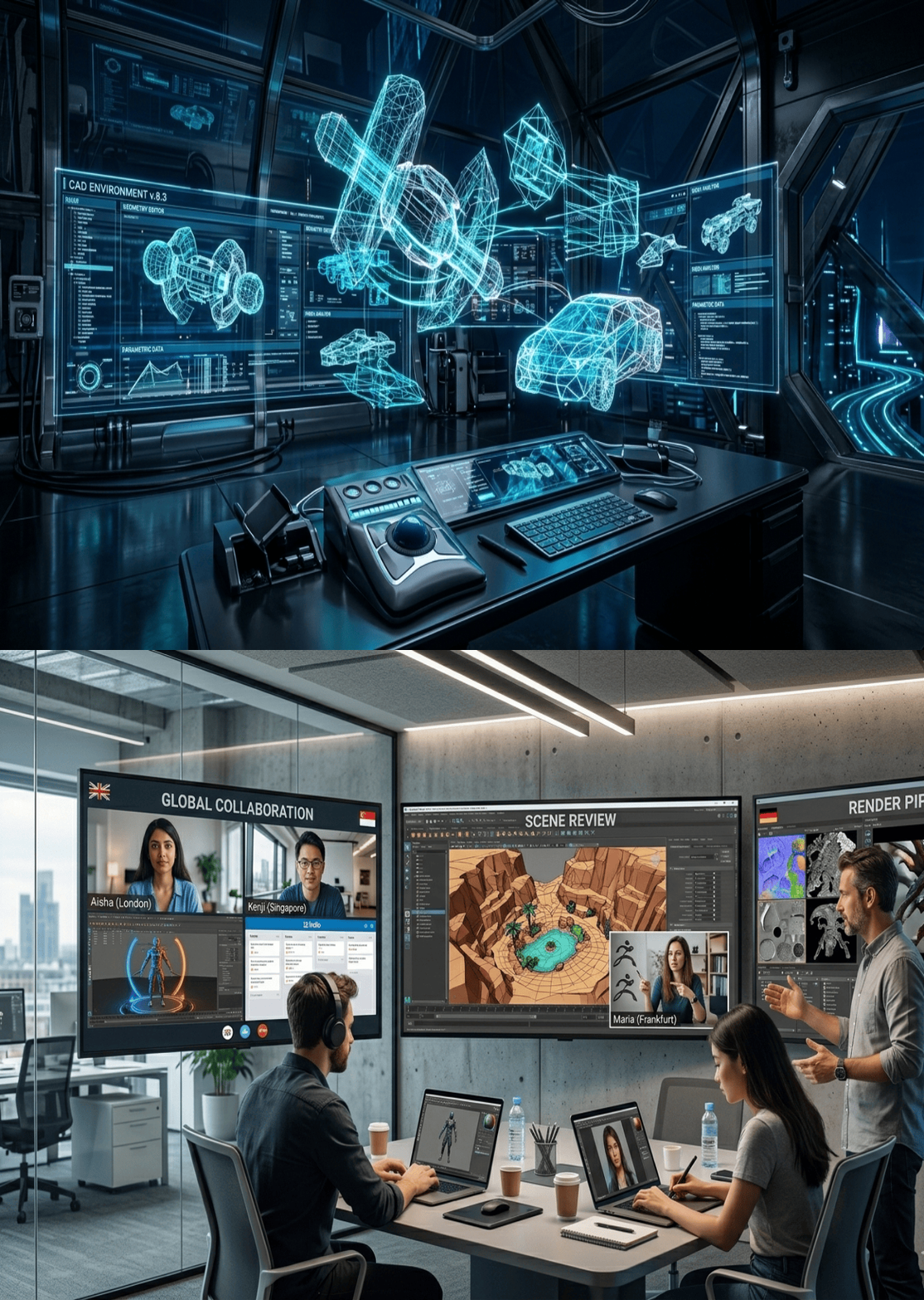
A model first takes shape inside a computer. Through special tools, designers build forms that exist only as code until machines give them life. Instructions form when another kind of program breaks down the shape into layers. These steps guide the printer, telling it exactly where to place material.

Among well-known CAD programs are SolidWorks, Fusion 360, Rhino 3D. Tools beyond design help test how prints will behave, improve models, fix flaws in files ahead of production.
3D Printing Uses
From healthcare to aerospace, 3D Printing Designs shows up everywhere – fast to produce parts, built just how you need them. Design changes happen on the fly, without slowing things down. Flexibility shapes each job differently. Speed keeps projects moving ahead quietly.
Aerospace and Aviation
From time to time, the aerospace field turns to 3D printing when making parts like brackets that weigh less than usual. Often seen in custom tooling, these printed pieces also show up as guides during assembly processes. Instead of traditional methods, some teams choose this approach for building early models before full production begins. Where strength matters most, certain elements take shape through layered material buildup. Geometry gets fine-tuned along the way, simply because the design allows it.
Industrial Machinery
From time to time, factories turn to 3D printing when they need just a few items made. One part replaces another on machines without long waits. Custom-built tools show up where standard gear won’t fit. Jigs take shape fast, matching exact needs. Fixtures hold things steady – each designed for one task only. Efficiency climbs because everything fits right.
Consumer Electronics
From plastic layers built up slowly comes quick model making, strong outer shells, replacement bits when needed, one piece at a time. Machines shape forms overnight that last long under stress, fitting odd spaces where standard parts fail. Custom shapes emerge without molds or tooling, made only once yet exact each try. Durable results rise from digital plans turned real through heated nozzles tracing paths in air.
Medical Industry
From prosthetic limbs to custom dental pieces, medical uses show up in surprising ways. Surgical templates help guide procedures with precision fit. Implants made for bone repair adapt uniquely to individual needs. Models built from patient scans bring anatomy into tangible form. Even tooth replacements now take shape through tailored design.
Automotive Industry
Besides shaping early models, car makers apply 3D printing to build tools that fit special tasks. Lightweight parts take form through layered fabrication, skipping traditional limits. Testing happens faster when pieces arrive on demand, not weeks later. Custom production adapts without expensive retooling, thanks to digital design shifts. Each step leans on additive methods, quietly changing how things get made.
Jewelry Industry
From tiny details to full forms, jewelry makers rely on 3D printing for custom work. Instead of traditional molds, they shape designs through printed wax models. These patterns then help form rings or pendants in gold or silver. Some skip wax entirely, building metal parts directly by layering fine powders. With digital precision, each piece matches exact measurements down to the smallest curve. Tools evolve, yet craftsmanship stays central. Designs once hard to mold now emerge clearly, one print at a time.
3D Printing Lets People Make Solid Objects Layer By Layer Using Digital Designs
What makes 3D printing stand out? Building tricky shapes without spending much on prep work happens quickly. Because of that, changing one item or many feels almost effortless. Speed in testing ideas jumps forward since new versions pop up fast. On top of this, picking from many different materials becomes part of the routine.
Still, making large amounts can take longer using 3D printers – often costing more than regular factory techniques. Certain ways of building parts struggle with durability, precision, or smoothness on the outside.
The Future Of 3D Printing
Once just a quirky way to make mockups, 3D printing now stands as a solid method for building actual products at scale. With speed on the rise, tougher materials rolling out, and expenses dropping steadily, this approach gains ground across industries – aircraft makers rely on it more, medical teams find new uses daily, car factories integrate it deeper, everyday goods increasingly emerge layer by layer.
One thing might follow another – automation could rise alongside greener materials. Speed meets custom needs without losing strength. Large runs of products may shift toward smarter factories. Performance stays central when methods evolve. What comes next leans into scale, precision, then new ways of building.
Getting Something 3D Printed
Some folks buy a 3D printer themselves, while others choose to work with experts who offer printing help. Ownership isn’t the only path – outsourcing is common too.
Picking up a printer works best when someone prints often, needing everything handled their own way. For companies, going through professional shops can be smarter – especially if they need bulk jobs, heavy-duty methods, or lots of different printed items without buying costly machines themselves.
Conclusion
3D printing began changing how things are made – speeding up creation while opening doors for smaller teams. Instead of waiting weeks, companies now build parts in days, thanks to layer-by-layer construction methods. Custom shapes that once seemed impossible suddenly appear on workbenches, quietly replacing old molds and machines. Because designs shift so easily, factories adapt without costly retooling. Step by step, entire sectors evolve – not overnight, but through steady tweaks and real-world tests.
Machines that build objects layer by layer might reshape how companies make things. Not just faster – different. With each improvement, factories could rely more on these printers to stay ahead. Efficiency often drives change. Innovation sneaks in through new materials, smarter software. 3D Printing Service Near Me can already see benefits where speed meets precision, Request For Assistance Today. Advantages appear quietly at first – then grow. Progress isn’t always loud; sometimes it hums inside a printer’s shell.