
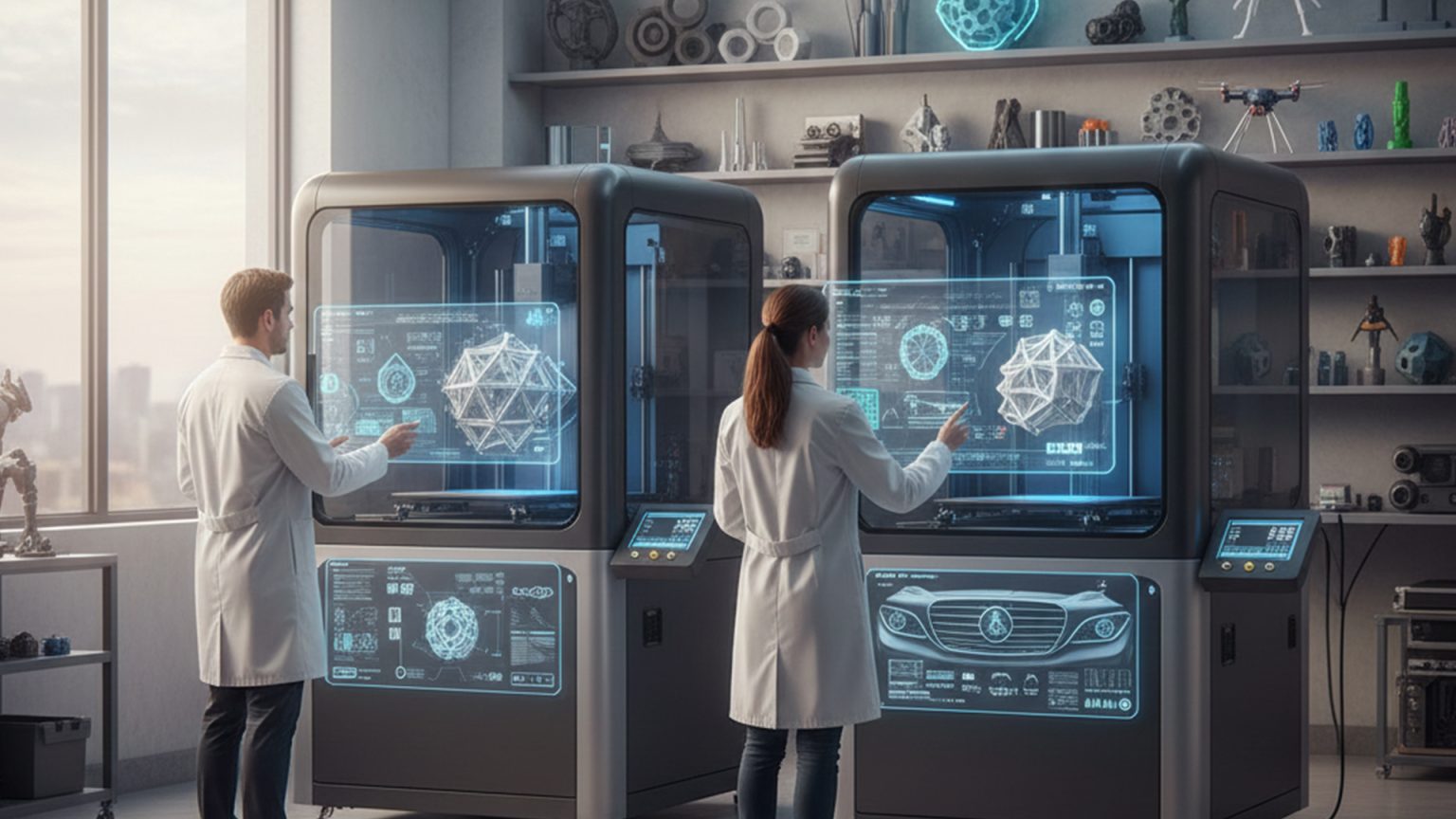
3D printing is considered one of the most significant technologies in a quickly evolving digital production environment. It is transforming the way concepts are created, tested, and realized in a variety of fields, including healthcare, architecture, industrial manufacturing, and rapid prototyping and product development.
Furthermore, companies and innovators use this technology throughout, particularly those seeking professional 3D printing services, to cut costs, shorten production times, and open up new creative possibilities.
This blog examines the definition of 3D printing, its operation, the various technologies acquired, and the reasons it transformed business in Malaysia and beyond. Let’s get started to know more!
Table of Contents:
-
- What Is 3D Printing? A Clear Technology Definition
- How Does 3D Printing Work?
- Types of 3D Printing Technologies
- Key Benefits of 3D Printing for Businesses
- Why 3D Printing Is Booming in Malaysia?
- Applications of 3D Printing Across Industries
- Choosing the Right Professional 3D Printing Partner
- Takeaway
- Faqs
What Is 3D Printing? A Clear Technology Definition
Additive manufacturing, or 3D printing, is the process of producing three-dimensional items by layering them from a digital file. In contrast to conventional subtractive manufacturing techniques, which remove material, 3D printing adds material only where it is required, which makes it incredibly accurate, flexible, and efficient.
Also, the procedure starts with a digital 3D design, which is usually prepared in CAD software or created with specialized 3D printing designs Malaysia. However, a 3D printer is then instructed to use this file, depositing material layer by layer until the finished product is complete.
Additionally, businesses are increasingly depending on 3D Model Printing Service solutions for product development and commercialization because of this innovative approach’s ability to facilitate the following factors:
- quick design iteration,
- customization, and
- on-demand production.
How Does 3D Printing Work?
The 3D Printing workflow typically follows these steps:
- Design Creation – A 3D model is designed using CAD software or optimized by experts offering Professional 3D Printing Services.
- File Preparation – The design is converted into a printable format, usually STL or OBJ.
- Material Selection – Materials such as plastic, resin, nylon, or metal are chosen based on functionality.
- Printing Process – The printer builds the object layer by layer with high precision.
- Post-Processing – Finishing processes like curing, polishing, or painting enhance quality.
Additionally, with access to advanced 3D Printing Services Malaysia, businesses can move seamlessly from concept to physical product.
Types of 3D Printing Technologies
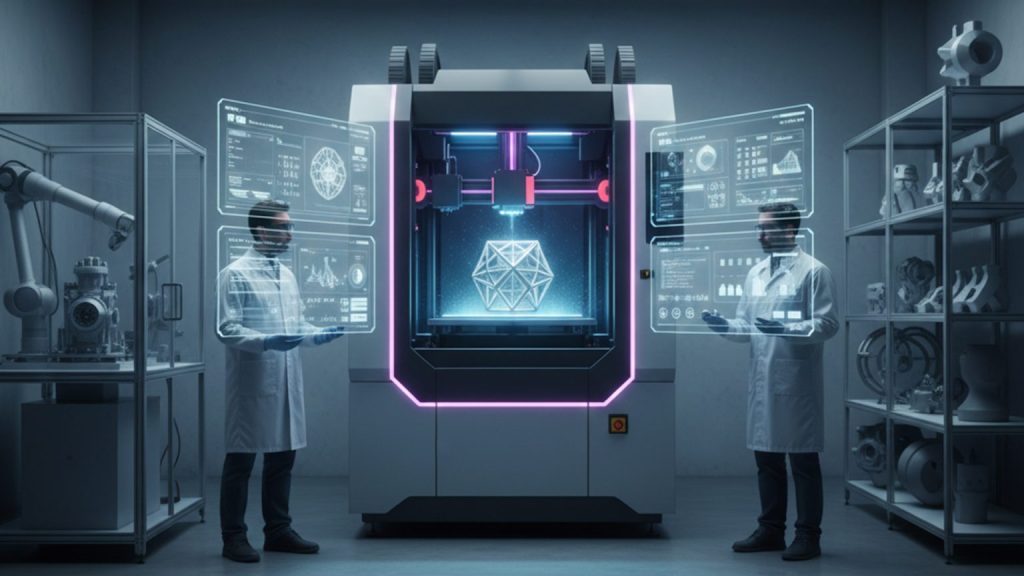
Understanding the different types of 3D Printing technologies helps businesses choose the right solution for their needs.
- Fused Deposition Modeling (FDM)
FDM is one of the most widely used 3D Printing technologies. It works by melting thermoplastic filament and depositing it layer by layer.
Best for:
- Prototypes
- Functional parts
- Cost-effective production
Furthermore, FDM is commonly used by companies seeking scalable 3D Model Printing Service solutions.
- Stereolithography (SLA)
SLA uses liquid resin cured by UV light to produce high-resolution parts. This 3D Printing method delivers exceptional surface finish and detail.
Best for:
- Medical models
- Jewelry
- High-precision prototypes
Hence, many Professional 3D Printing Services in Malaysia rely on SLA for premium output quality.
- Selective Laser Sintering (SLS)
SLS uses a laser to combine powdered materials into solid objects. It is highly durable and suitable for complex geometries.
Best for:
- Industrial parts
- Functional prototypes
- Small-batch manufacturing
Additionally, SLS is widely offered by advanced 3D Printing Services Malaysia.
- Digital Light Processing (DLP)
Similar to SLA, DLP uses a digital light projector to cure resin. It is faster while maintaining excellent accuracy.
Best for:
- Dental models
- Detailed components
- Rapid production cycles
Key Benefits of 3D Printing for Businesses
The quick use of 3D Printing is driven by tangible business advantages:
- Faster Time-to-Market – Accelerate product development cycles
- Cost Efficiency – Reduce tooling and material waste
- Design Freedom – Create complex geometries with ease
- Customization – Customize products for specific client needs
Additionally, these benefits make Professional 3D Printing Services an essential asset for startups, SMEs, and enterprises alike.
Why 3D Printing Is Booming in Malaysia?
The need for 3D printing services Malaysia has increased quickly in several industries, including
- architecture,
- healthcare,
- education, and
- manufacturing.
Hence, to stay competitive in both local and international markets, Malaysian companies are increasingly investing in 3D printing.
Furthermore, businesses may convert digital ideas into a tangible model without the conventional constraints of production when they have access to top-quality 3D Printing Designs Malaysia. Therefore, localized experience ensures better cooperation, lower expenses, and quicker turnaround times.
Applications of 3D Printing Across Industries
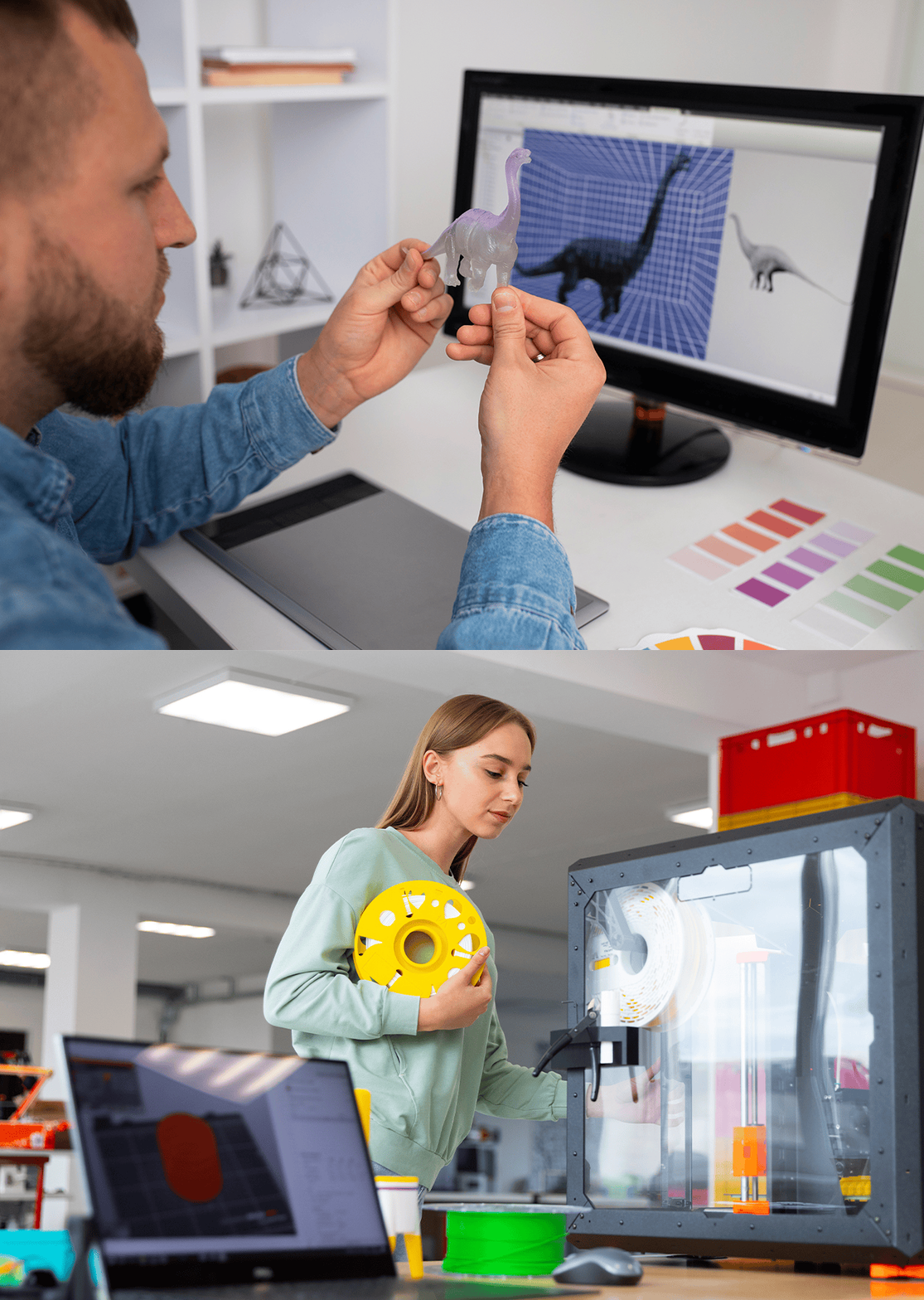
3D Printing is no longer limited to prototyping. Its real-world applications include:
- Product Development – Rapid iteration and testing
- Medical & Healthcare – Surgical guides, prosthetics, dental models
- Architecture & Construction – Scale models and design validation
- Manufacturing – Jigs, fixtures, and end-use parts
Additionally, these applications are best supported by experienced 3D Model Printing Service providers who understand industry-specific requirements.
Choosing the Right Professional 3D Printing Partner
Selecting the right Professional 3D Printing Services provider is important for achieving optimal results. Look for partners that offer:
- Advanced printing technologies
- Material expertise
- Custom design support
- Consistent quality and fast delivery
Hence, trusted 3D Printing Services Malaysia providers can help businesses scale efficiently while maintaining design integrity.
Takeaway
3D printing transforms the design, production, and delivery of goods. Also, because of its ability to lower expenses, boost productivity, and spur creativity, 3D printing has emerged as an important technological tool for contemporary companies.Moreover, the possibilities are endless, whether you’re looking for a trustworthy 3D model printing service, identifying innovative 3D printing designs Malaysia, or collaborating with professional 3D printing services. Hence, 3D printing will continue to lead the way in digital manufacturing innovation as sectors change.
Ready to turn your ideas into reality?
Experience state-of-the-art 3D printing services Malaysia designed for your company’s requirements by partnering with a reputable supplier of professional 3D printing services today. To begin your next innovation journey, get in touch with us right now.
FAQs
Is Mass Production Possible With 3D Printing?
Yes, 3D printing can be used for mass production, particularly for sophisticated, customized, or low to mid-volume products (usually up to 100,000 units), where it may be less expensive than traditional molding. Furthermore, it is increasingly used to create more complex geometries without the following factors:
- costly tooling,
- bridge production, and
- customization in large quantities.
What Direction Will 3D Printing Take In The Future?
With AI-driven automation, 4D printing of adaptable materials, and large-scale industrial applications at the leading edge of future developments, 3D printing is progressing from prototyping to becoming a widely used, fast, and environmentally friendly manufacturing technique. Furthermore, advanced metal printing, bioprinting, greater sustainability, and automated, dependable, and quicker production methods are important options.
What Is the Most Flexible Material for 3D Printing?
Thermoplastic polyurethane (TPU) is often regarded as the best all-around flexible material for 3D printing because it strikes a good balance between high elasticity, durability, and printability. It functions similarly to rubber, making it perfect for the following elements, including:
- protective cases,
- gaskets, and
- seals.
Additionally, due to its softness and high energy return (bounciness), PEBA (polyether block amide) is often regarded as a high-performance alternative.
What Is The Strongest Material For 3D Printing?
High impact, heat, and tensile strength are all provided by polycarbonate (PC). Moreover, it is generally regarded as one of the most powerful filaments for 3D printing.
What Kind Of Technology Does 3d Printing Use?
Additive manufacturing, also known as 3D printing, builds things from digital models using a variety of layer-by-layer technologies. Using materials such as plastics, metals, resins, and ceramics. However, important techniques include
- material extrusion (FDM),
- vat photopolymerization (SLA/DLP),
- powder bed fusion (SLS/DMLS),
- material jetting,
- binder jetting, and
- directed energy deposition (DED).