
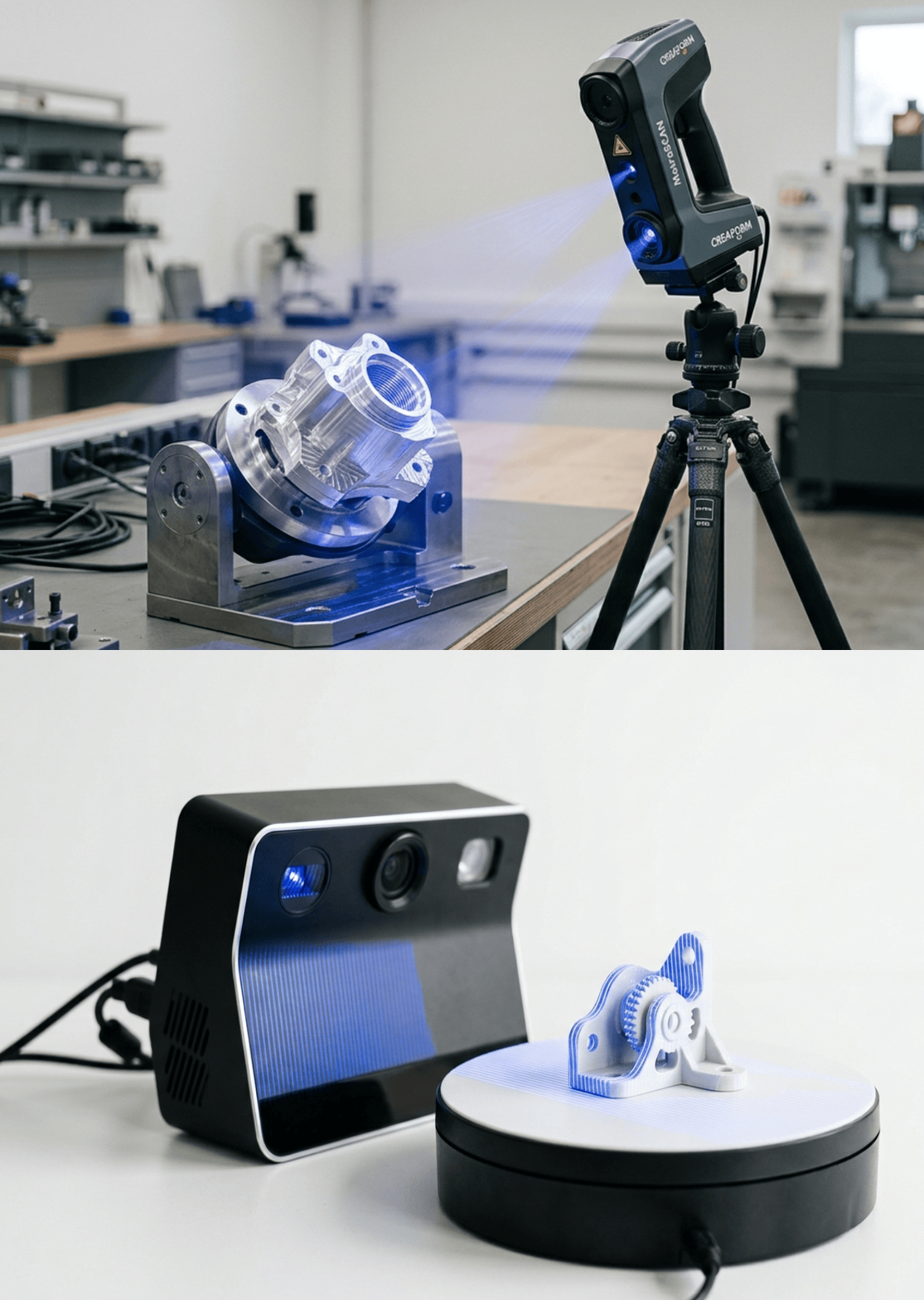
In a world driven by precision, speed and digitization, 3D Scanning Service is an invaluable technology. Whether you are a designer, engineer, artist or manufacturer, grasping the fundamentals of 3D scanning and its ability to capture, recreate and analyze the world around you will put you ahead of the game. In this informative guide, we look at the inner workings of the 3D scan technology, its methods and applications, as well as what sets the industry-leading Revopoint scanners apart from their competitors.
3D Scanning Explained
What is 3D scanning?
3D scanning refers to the technologies used to capture the shape and/or surface detail of real-world objects and convert them into digital 3D models. The obtained data can then be used to inspect, recreate, or alter a physical object in the digital space.
How does 3D scanning work?
A number of different projection methods can be used in 3D scanning. Depending on the technology at hand, a pattern of light may be projected on the object, or lasers may be used to measure a specific point at a time. Additionally, some methods rely solely on a camera to calculate the depth of an object. The acquired data is then processed by the software, which analyzes the points and reconstructs a digital model of the object, allowing it to be measured, edited and formed.
The most popular methods of 3D scanning include:
Structured-light scanning
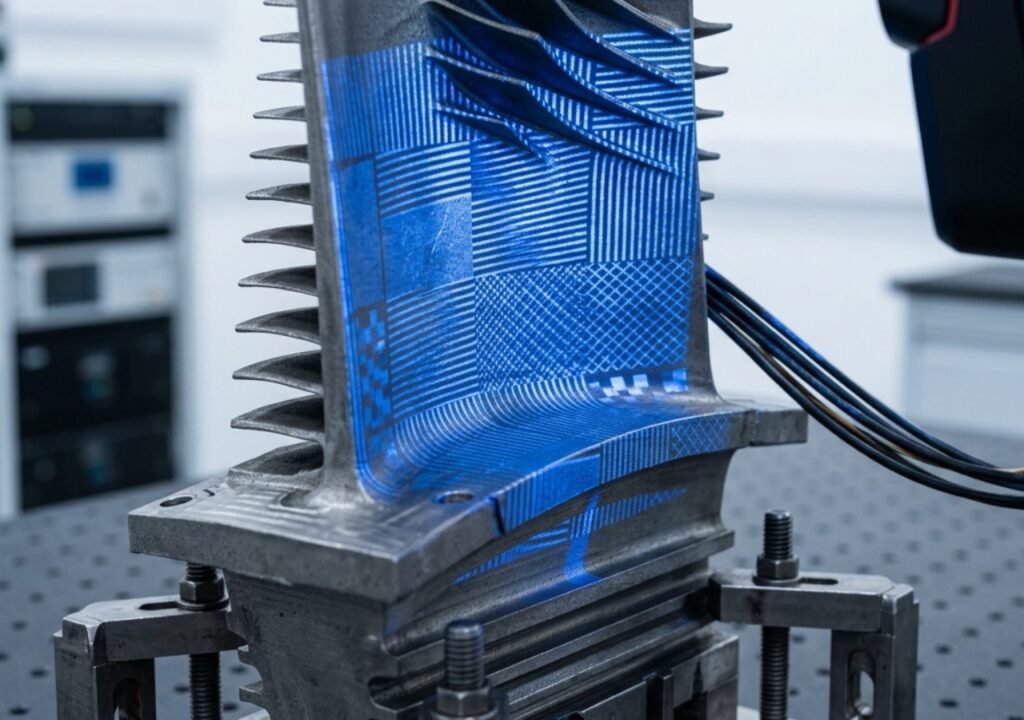
A pattern of light is projected on an object, and a pair of cameras captures the deformation of the pattern. It is a versatile method, used in most consumer and Professional 3D Scanning Services for fast and accurate data acquisition of small and medium objects.
Laser scanning
A laser beam traces over the surface of the object while a sensor tracks its position. This is a very reliable method used for capturing accurate data, or scanning large-scale objects and surfaces. The MetroX 3D scanner, for example, uses laser scanning technology to perform fast and accurate scans while maintaining a high level of precision.
Photogrammetry
In photogrammetry, a series of photos are taken from different angles around the object, and the camera’s position and field of view are calculated to estimate the size of the images and recreate a 3D model. This method is less accurate but is simple and relatively quick when using the right tools. The MIRACO Plus, for example, is the worlds’ first standalone 3D scanner with photogrammetry metrology built directly into it.
Contact Scanning
Probes trace over the surface of the object to collect data points. This method is common in industrial metrology, and is typically used for highly accurate measurements. After the data acquisition process, the collected data usually has to be processed before it can be used.
A digital 3D model consists of thousands or even millions of vertices depending on the scanner. A set of these points is referred to as a point cloud, and it represents the geometry of the scanned object. Point clouds can be processed further to produce a mesh, which is a 3D model consisting of interconnected polygons.
Why is 3D scanning valuable?
3D scanning technology bridges the gap between the physical and digital worlds, enabling a wide variety of innovative possibilities. Some of the most common reasons to use 3D scanning include:
Time-saving
Quick and accurate digitization of complex or delicate objects without the need for tedious manual measurements.
Accuracy
Ability to capture fine details and maintain a high level of precision throughout the scanning process.
Versatility
The ability to capture a wide range of objects from different sizes, shapes, and materials.
Digital work-flow
Easy integration into the design and manufacturing pipeline to speed up prototyping, printing, or other production processes.
Some of the most common applications of 3D scanning include:
Reverse Engineering
3D scanning enables quick and accurate capturing and replication of existing products. This is especially useful in product design and restoration when trying to recreate a part or an object that does not have any digital data available. Get more information on 3D scanning in reverse engineering.
Aerospace
Fast and accurate scanning of plane parts and machinery to determine the condition or to recreate worn-out aircraft components Learn more about 3D scanning solutions for the aerospace industry.
3D printing
Digital 3D assets for 3D printing can be obtained faster and with greater precision. See how 3D scanning can help you harness the power of 3D printing.
Vehicle modification
Many performance cars require regular maintenance and upgrades. 3D scanning allows you to digitize and analyze car parts for potential modifications or to build 3D printed spare parts. Get more information on 3D scanning for car modification.
Healthcare
Custom prosthetics, orthopedic braces, dental equipment, and even facial implants can be produced from accurately scanned 3D data. Learn more about 3D scanning in healthcare.
Arts and design
3D scanning is an incredible tool to digitize and preserve precious sculptures, or to capture the fine detail for digital art projects or unique jewelry designs Learn more about 3D scanning in the arts and design industry.
Heritage Preservation
Digitization of cultural artifacts and historical sites helps preserve and protect them for future generations. In addition, digital replicas can be used in research, restoration, or exhibitions. Get more information on 3D scanning for heritage preservation.
Digital entertainment
3D scanned data helps bring real-world objects to digital entertainment, enabling faster production and more realistic models. Use 3D scanning to accelerate your CGI, VFX, and game development workflows. Get more information on 3D scanning for the digital entertainment industry.
What To Look Out For In A 3D Scanner
Accuracy, precision, fused point distance, ease of use, and versatility are the most important factors to consider when looking for a 3D scanner. For example, when choosing between different 3D scanners, you may wish to consider the following:
Accuracy refers to how close a measurement is to an actual value, whereas precision refers to how close repeated measurements are to one another. Fused point distance, on the other hand, is the distance between two consecutive points and is related to the resolution and quality of a 3D model. Finally, ease of use and versatility define whether a 3D scanner is right for your needs.
Revopoint offers a range of 3D scanners that offer outstanding value, power, speed and precision to help you digitize the world around you. Our MIRACO, MetroX and POP 3 Plus scanners, for example, offer unmatched accuracy and speed while supporting a marker-free scanning process in most cases. At the same time, these 3D scanners provide an option to use additional scanning markers if needed. In addition, they offer robust editing tools that allow users to easily edit and prepare 3D models for printing or manufacturing.
Our 3D scanners, for example, utilize advanced blue light technology to capture very fine detail on objects made of challenging materials, such as dark and reflective surfaces.offer a variety of stand-alone Malaysia 3D Scanning Service solutions designed for portability and accuracy. These models offer outstanding volumetric accuracy per frame while additionally allowing the user to perform all the necessary processing steps directly on the scanner. We additionally offer a range of accessories, including turntables, coded markers and scanning spray, to help you get the most out of your 3D Scanning Services Near Me experience.
Innovation and advancements in the field of 3D scanning continue to drive unprecedented improvements in speed, power, accuracy and accessibility. As a leading 3D scanning company, we are constantly working on developing groundbreaking scanning solutions that redefine the industry standards. Our latest technologies incorporate marker-free scanning processes, as well as additional built-in tools that make scanning more intuitive and faster. We believe that high-resolution 3D scanning should be accessible to all, and we work to continuously reduce costs and expand the reach of our Outsource 3D Scanning solutions.
Conclusion
3D scanning technology is changing the way we digitize the world around us. Whether you are looking to optimize your quality control process, speed up your design and prototyping workflow, or preserve a historic artifact, our 3D scanning solutions will help you achieve outstanding results with relative ease. Get in touch to learn how to advance your 3D scanning technology and workflow.