

Table of Contents:
Can You Use What Materials for 3D Printing?
3D Printing Services Malaysia can exploit a range of materials like as thermoplastics like acrylonitrile butadiene styrene (ABS), metals in powder form, resins, and ceramics, depending on the intended use.
History of 3D Printing: Who Made This Invention?
Hideo Kodama from the Nagoya Municipal Industrial Research Institute developed the first 3D Printing machine, introducing two additive techniques for creating 3D models.
When Was 3D Printing Invented?
In 1984, stereolithography was introduced, and Chuck Hull created the first 3D printer in 1987. Later innovations such as selective laser melting and sintering followed, and after the patents expired in 2009, 3D Model Printing Service became more affordable and widely accessible. Kodama began his early work on laser-cured resin rapid prototyping in 1981, building on Ralf Baker’s earlier inventions from the 1920s.
3D Printing Technologies
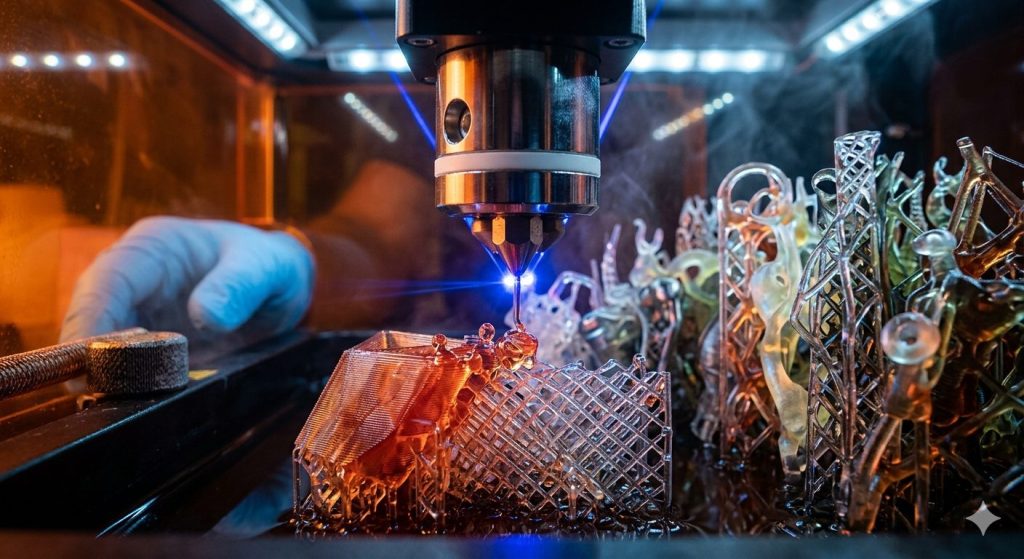
3D printing generally uses three main techniques: sintering, melting, and stereolithography. Sintering involves heating the material below its melting point to create high-resolution items; thermoplastics or metal powders are commonly used. Melting includes methods like powder bed fusion, electron beam melting, and direct energy deposition, where lasers or arcs are used to melt the materials. Stereolithography uses a process called photopolymerization to cure liquid resin with light, layer by layer.
3D Printing Processes
According to ISO/ASTM 52900, there are seven primary 3D printing types:
- Binder Jetting: Layers of powder are bonded with an adhesive; post-processing may be necessary.
- Direct Energy Deposition: Uses focused energy to melt wire or powder materials; suitable for metals, ceramics, and polymers.
- Material Extrusion (FDM): A heated nozzle feeds filament layer by layer; it is cost-effective but may require post-processing.
- Material Jetting: Deposits liquid materials similar to an inkjet printer; it is precise and allows for full color but can be brittle and expensive.
- Powder Bed Fusion (PBF): Uses thermal energy to fuse powder layers; this includes selective laser sintering (SLS) and direct metal laser sintering (DMLS).
- Sheet Lamination: Combines layers using adhesives (LOM) or ultrasonic welding (UAM) for metals.
- VAT Photopolymerization: Uses light to cure liquid resin layer by layer (SLA, DLP); produces smooth, detailed parts but they may be more brittle than FDM parts.
How Long Does 3D Printing Take?
Print time depends on the size of the part, the level of detail required, and the printer settings. Simple parts may take just a few minutes, while detailed or large parts can take several hours or even days.
Advantages and Disadvantages
Advantages
-
- Creates complex and custom geometries at a lower cost
- Low start-up costs, no molds needed
- Fully customizable using CAD software
- Ideal for rapid prototyping and small batch production
- Can produce parts with special properties like heat resistance or increased strength
Disadvantages:
-
- Some 3D printed parts are more brittle than traditionally made parts
- Large-volume production can be expensive
- Accuracy can vary depending on the printer and process
- Most parts require post-processing, such as sanding, support removal, or heat treatment
What is an STL File?
An STL file defines the 3D geometry for printing by representing surfaces as triangles. The resolution of the file affects the quality of the print—too high a resolution can lead to overlaps, while too low may cause gaps. Most 3D printers require STL files, which can be exported from CAD software.
3D Printing Industries
Professional 3D Printing Services is widely used across various industries:
-
- Aerospace: Creates lightweight, complex parts such as blisks.
- Automotive: Used for rapid prototyping, bespoke parts, and small-scale manufacturing.
- Medical: Produces custom implants, hearing aids, and reduces production costs.
- Rail: Used for custom components and repairing worn parts.
- Robotics: Enables fast and customizable production for exoskeletons and agile robots.
3D Printing Services
Companies like TWI provide comprehensive 3D printing services, including selective laser melting, wire and arc additive manufacturing, and powder bed fusion prototyping.They offer support from feasibility studies to full system integration.
Additive Manufacturing
TWI offers expertise in metal additive manufacturing (AM) and laser metal deposition (LMD), helping businesses adopt these advanced processes.
Contact Us
Explore the potential of 3D Printing Designs Malaysia for your business. From selecting materials to choosing technologies, our specialists provide guidance for industries like automotive, aerospace, medical, and robotics. Get In Contact to discuss your project, request a quote, or learn more about our services.