BLOG


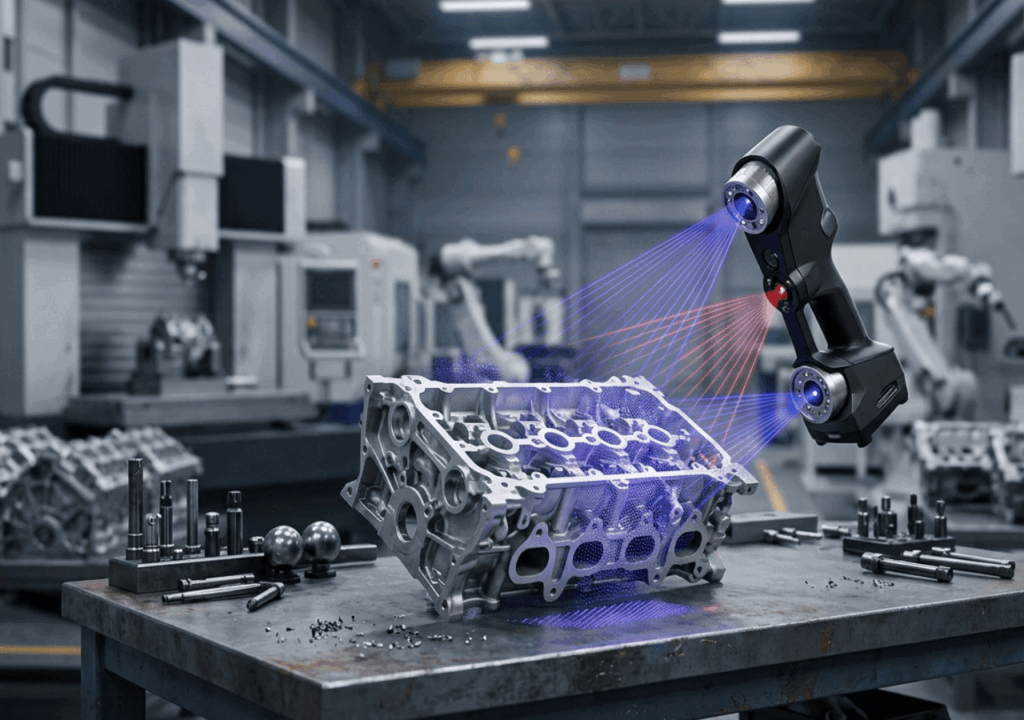
y choosing the right scanning method and software, businesses can achieve reliable results for quality control, reverse engineering, and product development. If you would like to learn more about implementing these solutions.
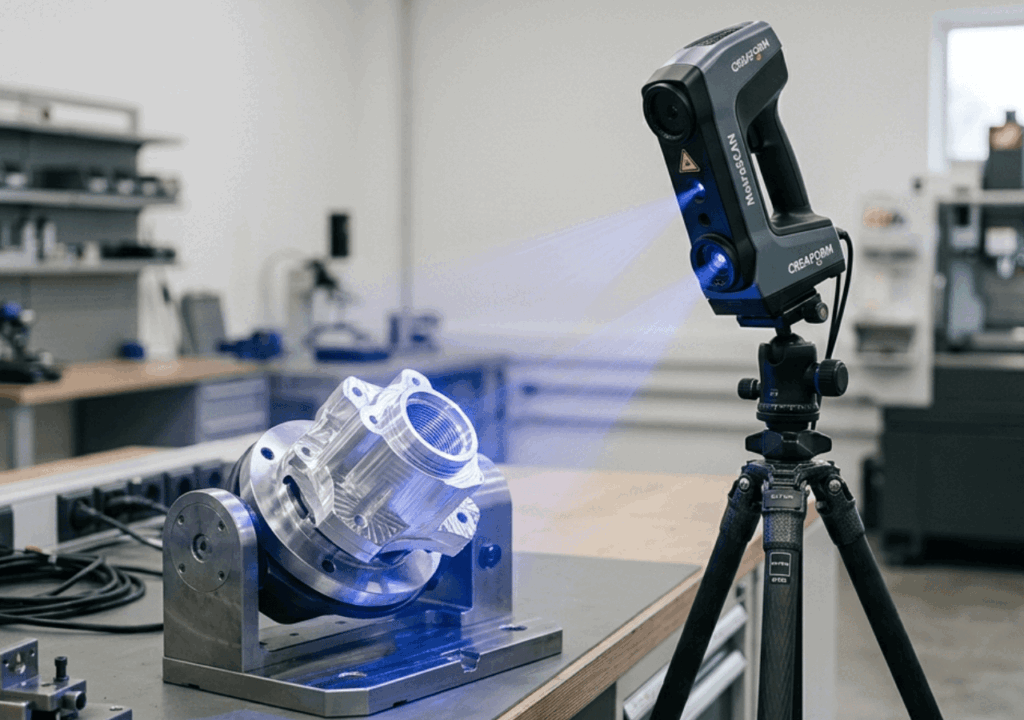
In a world driven by precision, speed and digitization, 3D Scanning Service is an invaluable technology. Whether you are a designer, engineer, artist or manufacturer, grasping the fundamentals of 3D scanning and its ability to capture, recreate and analyze the world around you will put you ahead of the game.

Wondering whether handing off 3D Modeling Outsourcing work could help your company? Here’s a look that might clear up what you’re unsure about.
Starting fast on fresh work? That happens when tasks move outside the company. Handling Outsource 3D Modeling gets simpler, less burdened by delays. Efficiency grows, so does income – thanks to support from external experts.
Curious about outsourcing 3D Modelling Services? Stick around. Next up, a closer look at what really matters – without the noise
3D Modeling, in a nutshell, is space and dimension rendering.Reality finds its mirror in numbers when machines run certain programs. Outsourcing three-dimensional design means another team handles it for you instead.
Out there, plenty of businesses hand off 3D modeling work because it just makes sense for how they operate. Efficiency climbs when tasks flow smoother through outside help. Operations shift into better shape, often uncovering options missed before. Going past standard approaches becomes possible once the groundwork is handled elsewhere.
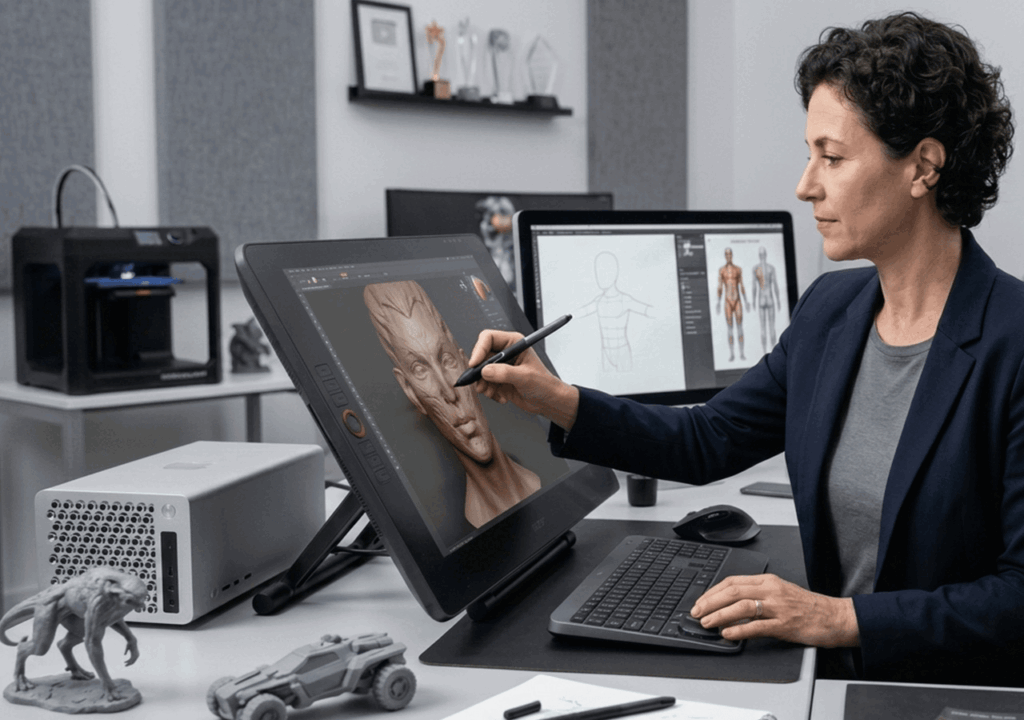
A shape comes alive when drawn in three dimensions. Ideas shift from thought to something you can see. This happens through digital frames built one line at a time. One view leads to depth, then structure appears. A scene forms not on paper but inside software. What was flat now has corners, edges, volume. Each curve shaped with precision. Objects exist first in imagination, later on screen. The process bridges thinking and making without skipping steps.

How a story looks can shift its mood entirely. Handmade drawings bring a soft rhythm to scenes. Digital creation often moves with sharper precision. Clay shapes give weight, while paper cuts add texture. Mixing real film with animated parts creates surprise. Every method breathes separate life into the tale. Memory holds onto these differences without trying.
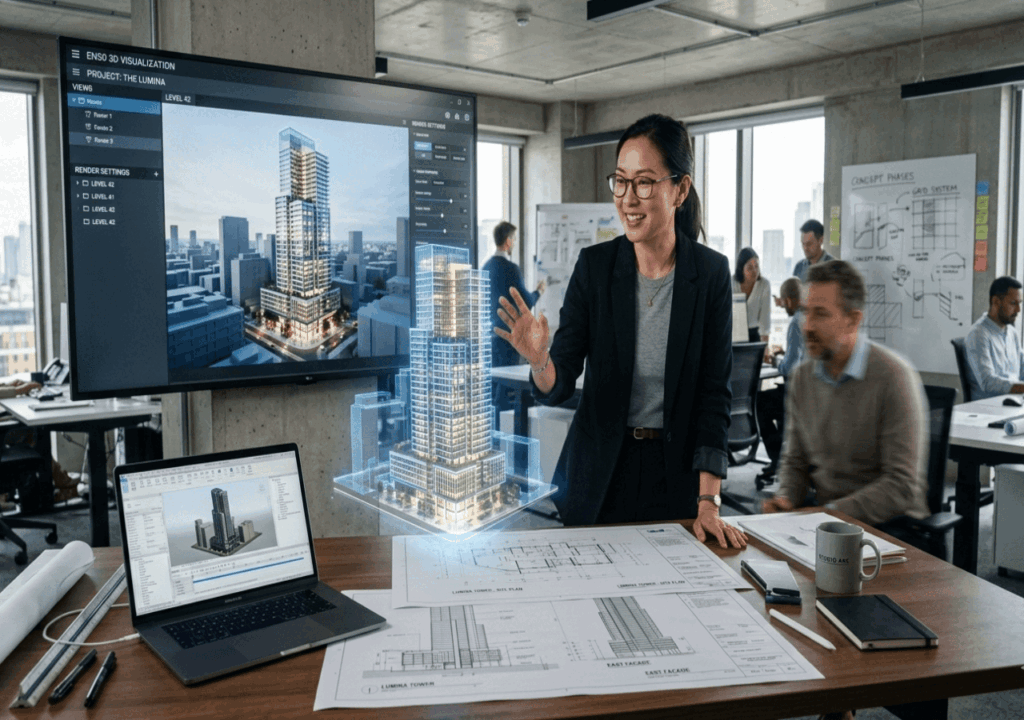
Out of still thoughts come moving pictures, shaped by Animation Services that turns concepts into lively scenes – a smart move when grabbing interest matters. When it comes to explaining things through ads, lessons, or showing how something works, knowing which kind of motion style fits helps everything land better. While looking at options, think about how each scene should flow, what mood it carries, since technique shapes perception quietly but deeply. Working with solo artists who craft frames by hand often adds unique flavor, their touch blending skill with fresh thinking. These creators shape imagination into finished pieces others just talk about.
Picture that moment when a clip stopped you mid-scroll. It likely moved shapes across the screen to pull you in. Vision cuts through noise quicker – sixty thousand times speedier than reading words. Motion builds on that, turning ideas into something eyes latch onto, leaving still pictures behind.
Here’s what most people miss – every style of motion has its place. Bouncy cartoon figures fit perfectly in startup videos yet feel off next to high-end products. That sleek 3D piece turning heads at events? It often comes with a price tag that quietly drains resources.This guide walks through all the basics of Professional Animation Services. From start to finish, it covers what kinds exist, so you can match one to your needs. Instead of guessing, you will see how each option connects to different aims. Finding skilled creators becomes simpler once patterns emerge. Clarity comes by sorting options, then linking them to real outcomes. The path forward shows itself after understanding these pieces.
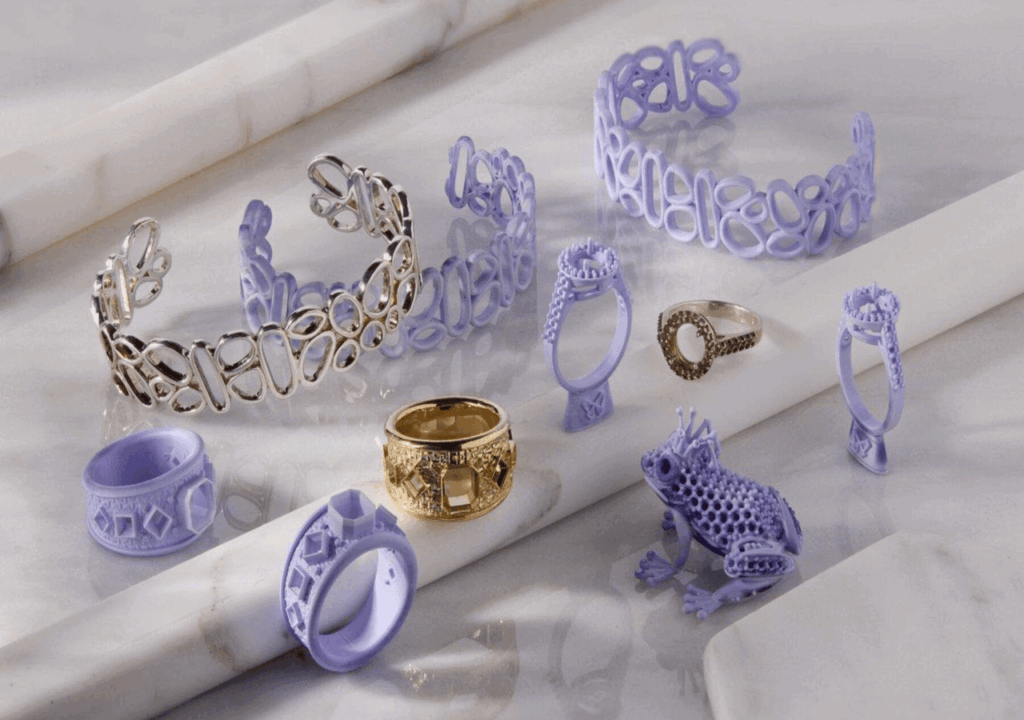
Out of nowhere, factories started using 3D Printing more often. This rise? It ties back to unique perks only this method offers. Yet alongside those gains come hurdles – ones worth pausing for. Though new and promising, every advantage brings something heavier on the other end.

Table of Contents: Understanding 3D Printing 3D Printing and Additive Manufacturing 3D Printing With Fast Prototype Creation History Of 3D
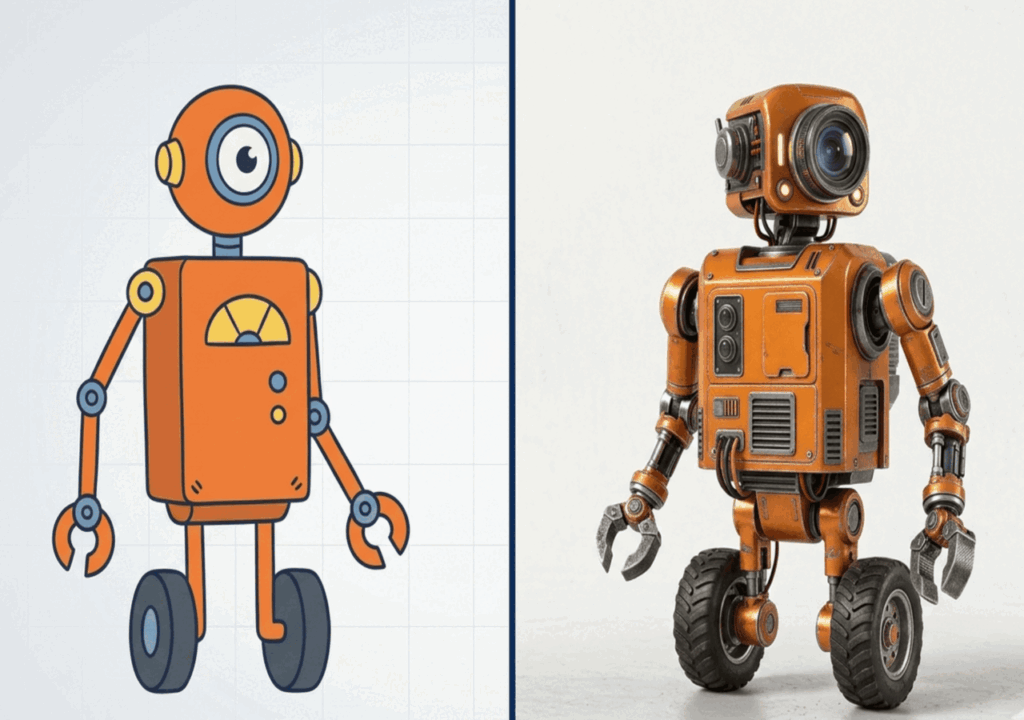
Start with paper-thin images that move frame by frame when it comes Animation Studios in Malaysia to 2D – these live on screens without depth. Meanwhile, 2D vs 3D thrives in virtual rooms where shapes have volume, shadows play across surfaces, and movement feels grounded in space. One relies on drawing skills refined over time, the other leans into software that mimics real-world physics. Demand exists for both styles across industries, yet each opens separate doors professionally. Tools differ sharply – one might use tablets and timeline editors, another navigates complex rigs and rendering engines. Learning one path won’t teach you the other, even if some principles overlap slightly. Seeing these differences clearly helps match your strengths to the form that suits you. What sticks matters less than what aligns.
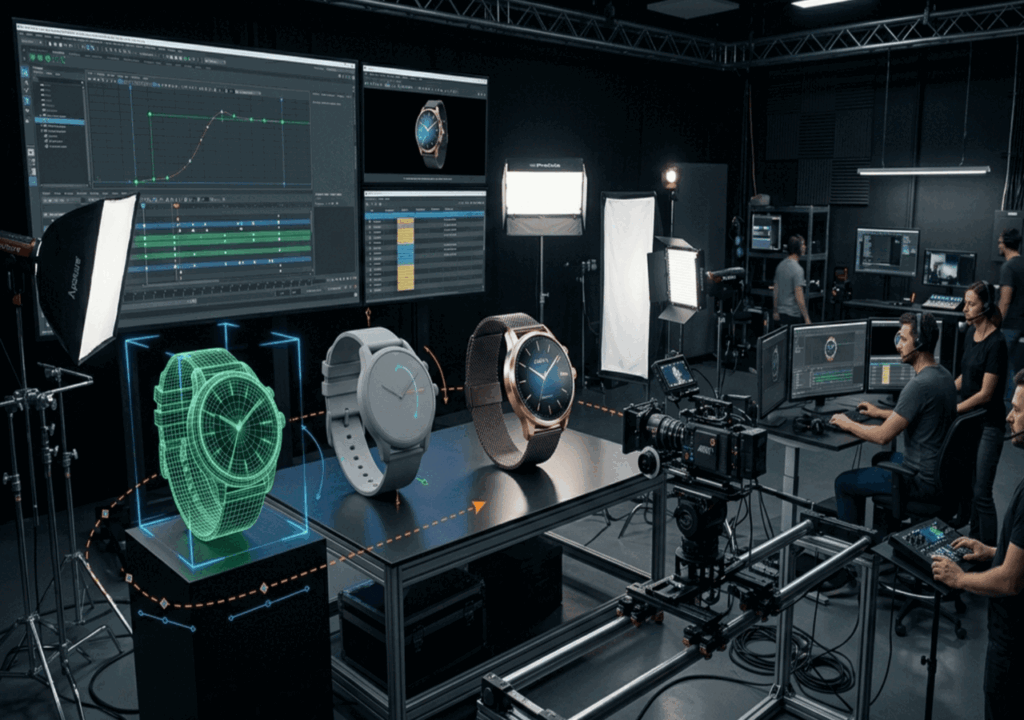
Once just for movies and video games, 3D Animation now shapes how companies share their message. Visuals built in three dimensions grab attention differently – more lifelike, flexible, pulling viewers in without feeling forced. By 2025, faster rendering tools combined with artificial intelligence shift what teams can produce on tight timelines. Immersive formats such as augmented and virtual reality weave seamlessly into these animated experiences. How it functions might seem complex at first glance: models shaped digitally move through simulated space frame by frame. Instead of flat drawings stacked side by side, depth gives motion a physical presence people feel almost instantly. Industries outside entertainment – from healthcare to architecture – adopt this approach to explain intricate ideas clearly. Compared to traditional two-dimensional styles, the sense of realism becomes harder to ignore. Marketers find value not because it’s trendy but due to measurable shifts in audience response patterns. Understanding its role means seeing beyond software – it’s about crafting moments that register emotionally.