
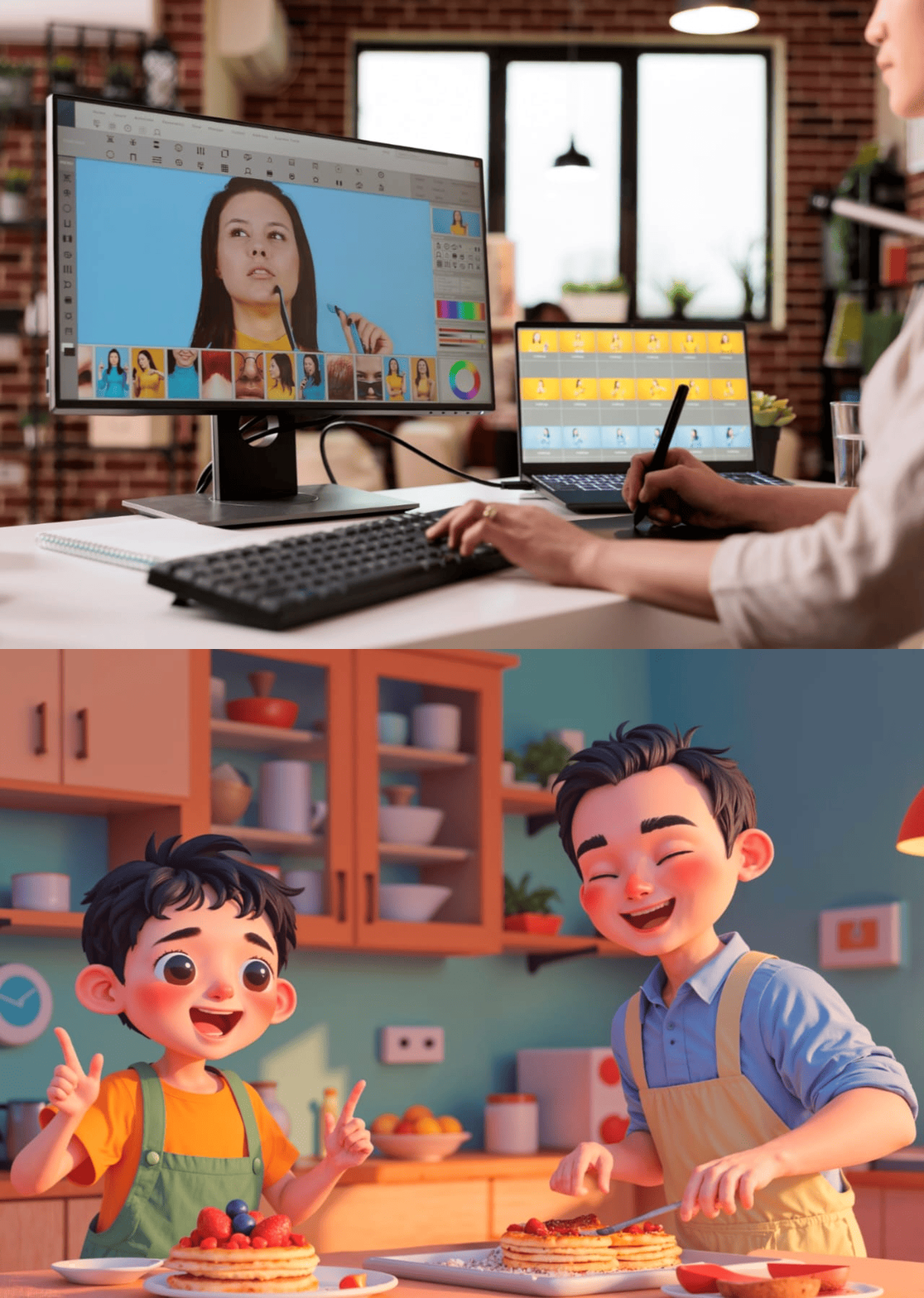
3D Animation is an innovative and powerful technique of creating moving images in a three-dimensional virtual environment. Unlike 2D Animation , 3D Animation creates animation characters, objects, and environments with height, width, and depth, giving a realistic feel to the audience. 3D Animation Malaysia has become an indispensable part of the digital media space and finds application in movies, video games, commercial use, architecture, education, and health sectors. This article aims to explain the definition of 3D animation, types, process, and examples with detailed explanations.
Table of Contents:
What is 3D Animation?
3D animation is a computer-generated process of creating three-dimensional moving images in a digital environment. It is used in a wide range of industries such as entertainment, health, architecture, education, and commercial. 3D animation allows animators to create characters and objects with height, width, and depth, unlike 2D animation. The animation process involves computer-aided designing of characters and objects followed by their deformation, posing, rigging, and deformation to create animation. Some of the popular 3D animation software include Maya, Blender, Cinema 4D, and Houdini.
Now let us look at the process of 3D animation.
Key Features of 3D Animation
Before discussing 3D animation types and process, it is essential to understand what makes 3D animation different from other animation styles, such as 2D animation.
Three-dimensional environment: 3D animation creates a 3D effect where objects have height, width, and depth.
Realistic Lighting and Shading: Realistic lighting and shading techniques give a realistic feel to objects and characters.
Camera Movement: The animation process allows camera movement, similar to a live camera shot.
Physics Simulation: 3D animation software allows the animator to simulate physics and movement of objects, such as gravity, and fabric movement.
Character Rigging: Characters are rigged to a skeleton to allow animators to pose and move them realistically.
3D Animation Types
There are several types of 3D animation, each with its unique application and approach. The major types of 3D animation include the following:
1. Character Animation
Character animation refers to a type of 3D animation that brings characters to life. It is a popular type of animation used in video games and movie production. It involves deforming and rigging of animation characters to allow them to move realistically.
Character animation finds applications in movie production, video games, short films, and television networks. Various animation software such as Autodesk Maya, Blender, MotionBuilder, and Cinema 4D can be used to make character animation. The animator uses keyframe animation, motion capture, and rigging animation to animate the characters. It is one of the most complex types of animation as animators need to make characters move and behave like humans.
For example, the animated movies such as The Incredibles , Toy Story , and Shrek use character animation.
2. Mechanical Animation
This type of Industrial 3D Animation is used to animate mechanical objects and mechanisms. It has various applications, such as engineering, architecture, product design, and technical communication. Mechanical animation makes objects and machinery move realistically to demonstrate their working principles.
For example, a mechanical animation can be used by a car manufacturer to showcase how a car engine works. Mechanical animation does not require the animator to create visual effects or emotions because it is more focused on demonstrating the working of a particular mechanical mechanism.
3. Motion Graphics
Motion graphics is a digital animation style that combines elements of 3D animation and graphic design. It is a great way to incorporate visual effects and engaging videos to market products, promote services, develop explainer videos, and create corporate videos. This type of animation is popular among marketing companies and is used to create social media content, advertisements, logos, and video graphics.
For example, a company can use motion graphics to create a video that demonstrates how a smartphone looks from all the angles and shows all the salient features and benefits of the product. Motion graphics are mostly used in television channels to create amazing visual effects and engaging content.
Commercials and corporate videos are other popular applications of motion graphics. This animation style is more focused on creating visual graphics content rather than creating life-like images and videos.
4. Visual Effects (VFX)
Visual effects (VFX) is a special type of 3D animation that combines live-action videos and animation to create spectacular effects. VFX is widely used in the production of movies, television shows, and video content.
Fantasy movies and superhero-series such as Avatar and Avengers are some of the popular fantasy movies that use visual effects. VFX can be used in various applications, such as creating realistic scenes, adding special effects, and editing videos.
5. Architectural Animation
Architectural animation is a computer-generated simulation of buildings and structures. It is commonly used in the real-estate industry to showcase houses and buildings to prospective buyers and investors. Architectural animation is used to create realistic and immersive videos that show how a house or building would look like in real life long before they are constructed.
For example, an architectural animation can be used by developers to showcase residential houses with luxury finishes and high-standard interiors to attract potential home buyers.
3D Animation Process
The 3D animation process is quite involved and takes a lot of time. It involves several steps, including developing concepts, designing, storyboarding, 3D Animation Studio Malaysia, 3D modeling, adding textures, rigging, animating, lighting, rendering, and post-production. Let us briefly discuss the 3D animation process.
Idea Development And Storyboarding
Every animation project starts with an idea or concept. The animation team brainstorms to develop a compelling storyline, scripts, character designs, and storyboards. A storyboard is a visual representation of the animation video or movie. It is like a comic book and provides a rough idea about what the animation will look like. The storyboard helps the team to know what to shoot and how to shoot it.
3D Modeling
The next step in the 3D animation process is 3D modeling. In this step, the animation team creates 3D computer models of all the objects that will be used in the animation. 3D modeling involves using a wide range of animation software such as Maya, Blender, Cinema 4D, and ZBrush.
The animation team creates 3D computer models of characters, objects, buildings, and other items that will be used in the animation project. The objects are made by using vertices, edges, and surfaces.
Texturing
The 3D-models created in the previous step need to have surface texture to look realistic. In texturing, the animator adds various attributes such as texture, reflectance, and surface roughness to 3D objects created in the modeling step. Textures define things such as the skin color of a character, the pattern on clothes, the reflection on metals and plastics, and the structure of wood.
Rigging
The next step is rigging, which is the process of adding a digital skeleton to 3D computer models. The digital skeleton allows animators to move and position 3D characters and objects on the screen. For example, a character skeleton contains joints that define the range of motion of various parts of the body. This way, rigging makes it possible to position the body parts of characters in different positions.
Animation
The animation step is the most exciting part of the 3D animation process. Animation is the process of bringing still images of 3D computer models to life. Animators use animation tools such as keyframe animation, motion capture, and rigging animation to animate the characters and objects. Keyframe animation works by setting keyframes at specific points in time and telling the computer what to do at a particular time.
Lighting
In the lighting step, animators add lights to illuminate the animation scene. This lighting step is critical as it determines the overall look and feel of the animation. Lighting also affects the visibility and clarity of animation.
Rendering
Once the animation scene has been created and lit digitally, the next step is to render the video. The rendering process is when the final frames of the animation or video are produced. In other words, it is the process by which a computer takes the animation scene and converts it into images, video, or graphic files. Rendering is an essential step in the 3D animation process because it determines the overall quality of the animation scene or video.
Rendering is usually the step that takes the longest time as it involves a complex calculation process. High-end animated movies and video content require long rendering times, where individual frames can take hours to render.
Post-Production
The post-production step involves enhancing and mixing the video or imagery to finalize the animation production. In this step, animators do video editing, add effects, and finalize the animation content. This step also involves adding color grading, special effects, background music, and other video editing techniques to enhance the animation.
Key Uses of 3D Animation
3D animation has a wide range of applications in varied industries.
1. Movies and Entertainment
3D animation has revolutionized the movie production process because it allows animators to create spectacular visual effects that could not have been possible using traditional hand-drawn animation techniques. Some of the best Hollywood movies, including Toy Story , Avatar, Frozen , and Shrek , are some of the best examples of 3D animated movies.
Visual effects (VFX) is a type of 3D animation that is used extensively in the movie production process to add special effects. Thus, 3D animation has become an integral part of the movie production process.
2. Video Games
Video game developers use 3D animation to develop video games characters, environments, and objects. 3D animation allows video game developers to make their games more engaging and realistic. 3D animation has enabled the production of modern video game titles such as Open-world games, racing games, and simulation games.
3. Advertisement and Marketing
Most marketing companies use 3D animation to develop advertisement videos and commercial content to market products and services. 3D animation is used because it allows marketers to create engaging and eye-catching content to attract customers. For example, 3D animation software such as Blender can be used to create amazing product demonstrations and product advertisements.
4. Architecture and Real Estate
3D animation is useful in the real-estate industry. Animation can be used to create 3D walkthroughs of houses, bungalows, and other buildings to help prospective buyers understand how a building would look like in real life.
5. Medical and Science
3D Animation Services is used in the medical field to demonstrate the working of the human body, disease mechanisms, and treatment procedures. Medical animation can also be used in health science and research to come up with new treatment methodologies.
6. Education and Learnings
3D animation is used in the field of education to teach various subjects in a more interesting and understandable manner. 3D animation makes it possible to develop engaging and interactive videos and images that can help students to learn various academic topics, including science and anatomy.
Advantages of 3D Animation
3D animation comes with several advantages over traditional 2D animation. Some of the major benefits of using 3D animation include the following:
Realistic feel: 3D animation can create images that look exactly like real-life objects and characters.
More creative: 3D animation allows a higher degree of creativity compared to 2D animation.
Greater flexibility: 3D animation allows animators to change and modify the animation content with ease.
Higher reusability: 3D computer models created in 3D animation can be used over and over again in different animation projects.
Future Trends And Outlook
The 3D animation industry is growing very rapidly and is expected to grow even further because of emerging technologies such as AI animation, VR animation, real-time rendering, NFTs, and the Metaverse. These technologies will play a crucial role in the future of animation and take the animation industry to new levels. As a result, there is a higher demand for 3D Animation Malaysia globally.
Conclusion
3D animation is a powerful digital art form that is used in various industries, including movies, video games, and advertisement. This article discusses the different types of 3D animation, process of 3D animation, and its applications. 3D animation is a very complex and time-consuming but exciting process. It requires a lot of skills and expertise to produce high-quality animation work.
Businesses looking to create engaging visual content can explore professional solutions from experienced animation specialists. To learn more about how 3D animation can support your projects, Reach out to our team for expert guidance and customised animation solutions.
FAQ
1.What Is 3D Animation?
3D animation is a computer-generated process of creating 3D moving images in a digital environment. Unlike 2D animation, 3D animation creates animation with height, width, and depth.
2. How Does 3D Animation Work?
3D animation works by generating 3D computer models of objects and animating the models using different animation techniques such as rigging, keyframe animation, and motion capture animation.
3. What Are the Main Types of 3D Animation?
The main types of 3D animation include character animation, mechanical animation, motion graphics, VFX, and architectural animation.
4. Is 3D Animation The Same As 3D Modeling?
No, 3D animation is not the same as 3D modeling. 3D Modeling involves generating 3D computer models of objects while 3D animation involves making the 3D models move to create animated videos and images.
5. What Are The 3D Animation Software?
Some of the popular 3D animation software include Autodesk Maya, Blender, Cinema 4D, and Houdini.
6. What Is the Process Of 3D Animation?
The 3D animation process goes through several stages, including idea development, storyboarding, 3D modeling, texturing, rigging, animation, lighting, rendering, and post-production.
7. What Are the Applications of 3D Animation?
The applications of 3D animation include movies, video games, advertisement and marketing, architecture, medical and science, and education.
8. What Is the Difference Between 2D And 3D Animation?
Unlike 2D animation that works in a 2D environment, 3D animation works in a 3D environment that has height, width, and depth.
9. Is 3D Animation a Good Career?
Yes, 3D animation is a great career with great job security and competitive salaries.
10. What Skills Are Required to Become a 3D Animator?
Some of the key skills required to become a 3D animator include creativity, visual effects skills, video editing, character design, and animation skills.
11. How Long Does It Take to Learn 3D Animation?
It takes between six months to two years to learn 3D animation, depending on the complexity of the animation being learned.