
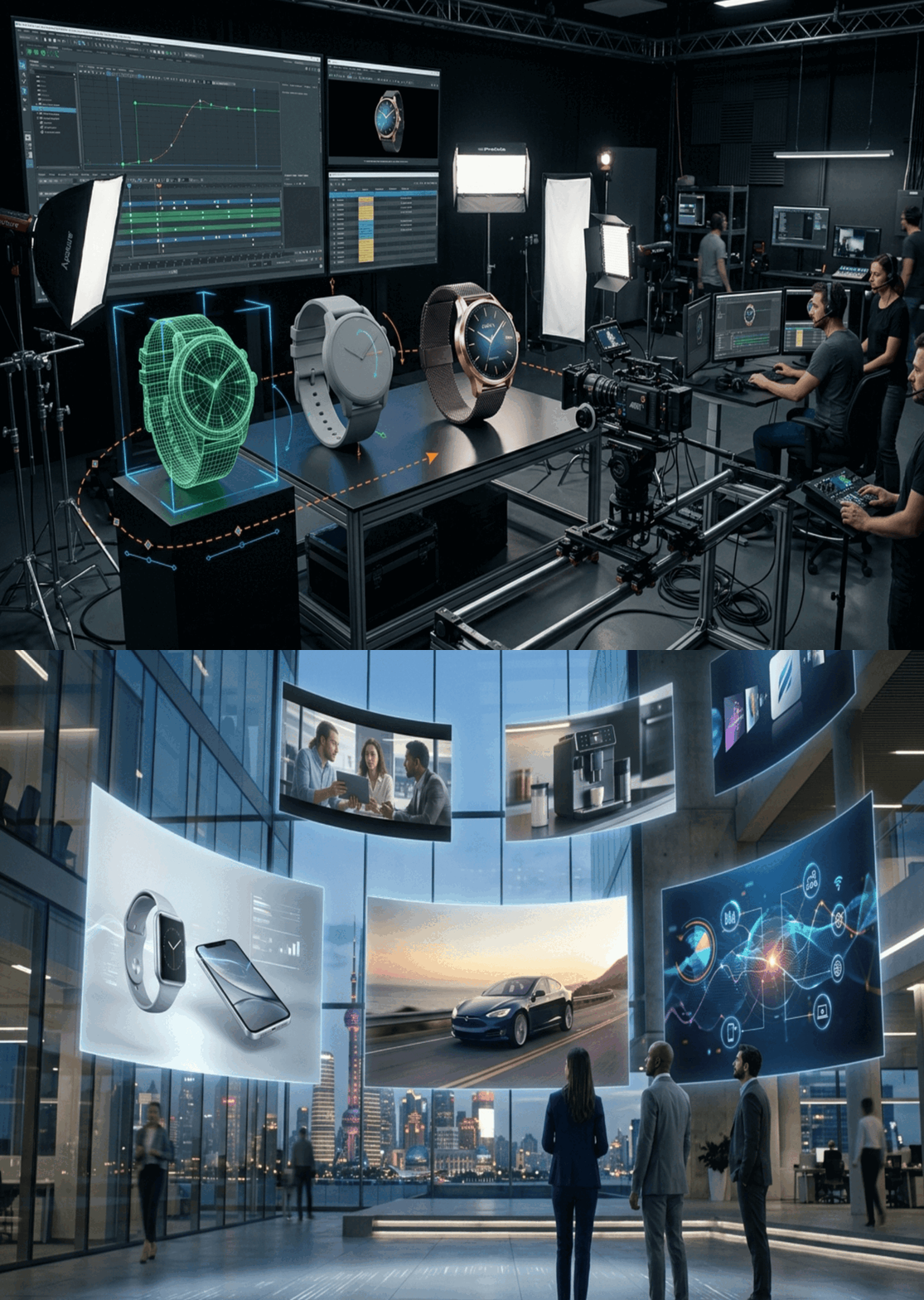
Once just for movies and video games, 3D Animation now shapes how companies share their message. Visuals built in three dimensions grab attention differently – more lifelike, flexible, pulling viewers in without feeling forced. By 2025, faster rendering tools combined with artificial intelligence shift what teams can produce on tight timelines. Immersive formats such as augmented and virtual reality weave seamlessly into these animated experiences. How it functions might seem complex at first glance: models shaped digitally move through simulated space frame by frame. Instead of flat drawings stacked side by side, depth gives motion a physical presence people feel almost instantly. Industries outside entertainment – from healthcare to architecture – adopt this approach to explain intricate ideas clearly. Compared to traditional two-dimensional styles, the sense of realism becomes harder to ignore. Marketers find value not because it’s trendy but due to measurable shifts in audience response patterns. Understanding its role means seeing beyond software – it’s about crafting moments that register emotionally.
Table of Contents:
What is 3D Animation? The 3D Animation Process
Out of modeling comes the shape – first building characters like clay. Then, placement takes over; scenes set up frame by frame through timing and space. After that, motion breathes life into still forms using gesture and weight. Visuals gain depth when light and texture wrap around each form. What emerges blends craft with imagination behind every shot.
- Starting from nothing, animators shape digital figures, items, or worlds with software such as Blender or Unreal Engine. Built by hand or pulled in through scans of actual things, these forms get layers of color, texture, and material to feel lifelike
- Scene setup begins with models arranged inside digital environments, then adjusted into positions. Movement comes alive through keyframes, captured performances, or algorithm-driven systems instead. The virtual space gets shaped deliberately, piece by piece. Action flows follow planned sequences, guiding attention where it needs to go. Storytelling drives every motion choice made here.
- Out of all stages, turning digital creations into sharp images takes place last. Fast engines today handle realistic looks or artistic styles without delay, so animating in three dimensions works well across uses.
2D And 3D Animation Compared
Choosing between 2D and 3D Animation Process usually comes down to artistic preference. Still, sometimes it’s shaped more by how each technique works behind the scenes.
One way or another, the 2D Vs 3D Animation methods differ far beyond just looks. Timeline often shapes which approach fits best, along with how much money is available. The people you aim to reach can tilt things one direction. Even if someone loves a certain look, what needs to happen might demand something else. At times, the lifelike results of Difference Between 2D and 3D Animation? more than the imaginative freedom of 2D.
3D Animation Compared To 2D Animation
On the flip side of flat drawings, three-dimensional motion feels more alive. Instead of just lines and colors, shapes move like they exist in real space. Because of this, viewers often pay closer attention. It pulls them in without feeling forced. Depth gives scenes weight. Movement flows naturally through light and shadow. Marketing finds value here – products look touchable, almost within reach
- Depth you can almost touch – three-dimensional images bring objects to life like they’re right there. Not flat, but full of space, shadow, shape. Think walkthroughs where walls feel close, or gadgets shown so clearly they seem within reach. These visuals build a version of reality that sticks close to what eyes know daily.
- Whatever the platform – website, social media, AR, or VR – 3D animation fits right in without skipping a beat. A steady feel for the brand sticks through, no matter where it shows up.
- Surprisingly real motion holds eyes tight, pulling viewers deep inside each frame. Sharp details stick around in memory well past the screen going dark. A stronger grip on focus often leads to next-step moves by those watching. Visuals that breathe like living things tend to linger where it counts.
3D Animation Uses In Different Fields
3D animation is transforming industries by delivering engaging, practical solutions:
- Real Estate: Virtual tours of apartments and commercial spaces offer immersive previews, helping buyers make informed decisions without physical visits.
- Education: Animated explanations simplify complex concepts, from medical simulations to scientific processes, enhancing learning for all ages.
- Out of nowhere, brands are turning to 3D animation – not just for ads but also Instagram clips and virtual spaces where users move around. These visuals stick because they feel alive, almost like you could touch them. Instead of fading fast, they spread – passed on through shares or caught in someone’s feed by accident. Motion gives identity a pulse, making logos seem less static. Even quiet moments in these animations pull attention, simply due to how light shifts across surfaces.
- Picture this – doctors learning surgery through lifelike 3D models that move like real bodies. These visuals break down complex steps so patients actually get what’s happening inside them. Instead of guessing, people see exactly how a heart valve works or where the incision goes. Training shifts when trainees can rotate organs on screen, spotting details photos hide. Clarity shows up quietly, replacing confusion with something closer to understanding.
Some marketers lean on 3D animation heavily. Apartment buildings often show off their spaces using digital models inside and out. Seeing everything virtually means future tenants can explore from afar instead of showing up in person.
Brands Use 3D Animation More Often Now
Out here, where screens flash too fast to catch, 3D animation stands out without trying hard. It pulls eyes because it moves like real life but feels fresh. Sharp visuals speak louder than words ever could. One big reason? They make messages stick around longer. Smooth scenes build trust before a single line is read. Many teams now pick them just for how quickly they connect. Looks matter more when everyone scrolls faster
- Customization: 3D animation can be tailored to any platform or audience, from social media clips to immersive VR experiences.
- Tools such as Unreal Engine plus Blender keep getting better, bringing down prices for solid 3D work. One reason good visuals cost less now? Progress in software anyone can access.
- Surprising visuals grab attention fast. A brand might stick in your mind because of how it looks. Strong images pull people in instead of pushing messages. Seeing something bold can lead to action without extra words. What stands out often gets remembered longer.
What’s Next in 3D Animation for Marketing?
One step ahead, tech pushes 3D animation further into ads. By 2025, shifts start showing – motion feels real, characters look alive, scenes blend with live video. Instead of flat images, depth draws attention. Tools get smarter, making creation faster. Brands pick storytelling that moves, not just sells. Behind each frame, effort focuses on feeling, not flash. What once seemed futuristic now runs daily campaigns. Still, clarity beats complexity every time
- Real-Time Rendering: Engines like Unreal Engine enable faster creation of dynamic, interactive content, enhancing user engagement.
- Out in the open, 3D animation breathes life into AR and VR through lifelike product previews. Instead of flat images, users see items shift in real space, fitting glasses or clothes onto digital versions of themselves. Behind the scenes, motion tracking aligns movements with on-screen changes. Through these layers, shopping stops being distant. Little by little, clicking gives way to stepping inside the experience.
- Tools powered by artificial intelligence simplify tasks such as capturing movement. This makes creating 3D animation faster, easier for companies to use. Motion tracking once took heavy gear – now it runs on smart software instead
Imagine how moving images can pull people in – three-dimensional animation does exactly that, making ads feel alive. With lifelike motion and flexible formats, it grabs attention where old methods fall short. Picture walking through a store without leaving home; virtual experiences now bring brands closer to users. Storytelling shifts too, drawing viewers into worlds they can almost touch. Because software gets smarter every year, creating these scenes grows easier over time. Artificial intelligence helps build details fast, while augmented reality lets them blend with real spaces. Headsets or phones both open doors to simulated environments. Brands using such techniques stand out simply by feeling more present. Instead of shouting messages, they invite curiosity. By 2025, expecting static content may seem odd when movement speaks louder.
To get started on your next animation project, get a quote from Animation Company in Malaysia on 3D animation services today.